What La Línea Actually Is: an Honest Look at the Town Beside Gibraltar
La Línea de la Concepción is not pretty in the way the brochures need a place to be pretty, and the people who live here are mostly fine with that. It is a working town on the edge of a famous Rock, and to understand it you have to know one thing first: the town exists because of Gibraltar, was literally built to lay siege to it, and has spent three hundred years living off the border ever since. That is not a flaw in the place. That is the place.
A town born as a line on the ground
The name is not poetry. La Línea means “the line,” and the line was a military one. After the siege of Gibraltar in 1727, King Felipe V had the engineer Jorge Próspero de Verboom build a fortified line across the narrow neck of land connecting Spain to the Rock — a wall of forts, anchored at each end by the forts of San Felipe and Santa Bárbara, thrown up between 1727 and 1735 to pen the British garrison in. A camp of artisans, merchants and families grew up around the soldiers to supply them, and that camp became the town. La Línea only separated from neighbouring San Roque and got its own first mayor in 1870, and took the full name La Línea de la Concepción a little over a decade later. It became a city in 1913 (Wikipedia). A town that started as a supply camp for a border has never really stopped being one.
The border is the economy, and always has been
Today the relationship is the same shape, just legal-er. Thousands of people cross the frontier every day to work in Gibraltar and come home to La Línea at night, and the town supplies the Rock with much of its fruit, vegetables and labour the way it once supplied a garrison. The flip side of that history is the one nobody puts on a sign: La Línea has always also lived off what crosses the border the quiet way. Tobacco and contraband are woven through the town’s story as deeply as the forts are, and the old fishing district of La Atunara — tuna boats, the almadraba tradition, and a reputation for night-time cargoes — is where a lot of that history happened. Locals will tell you about it without much embarrassment. It is simply what a border town on the edge of unemployment does.
The honest economics
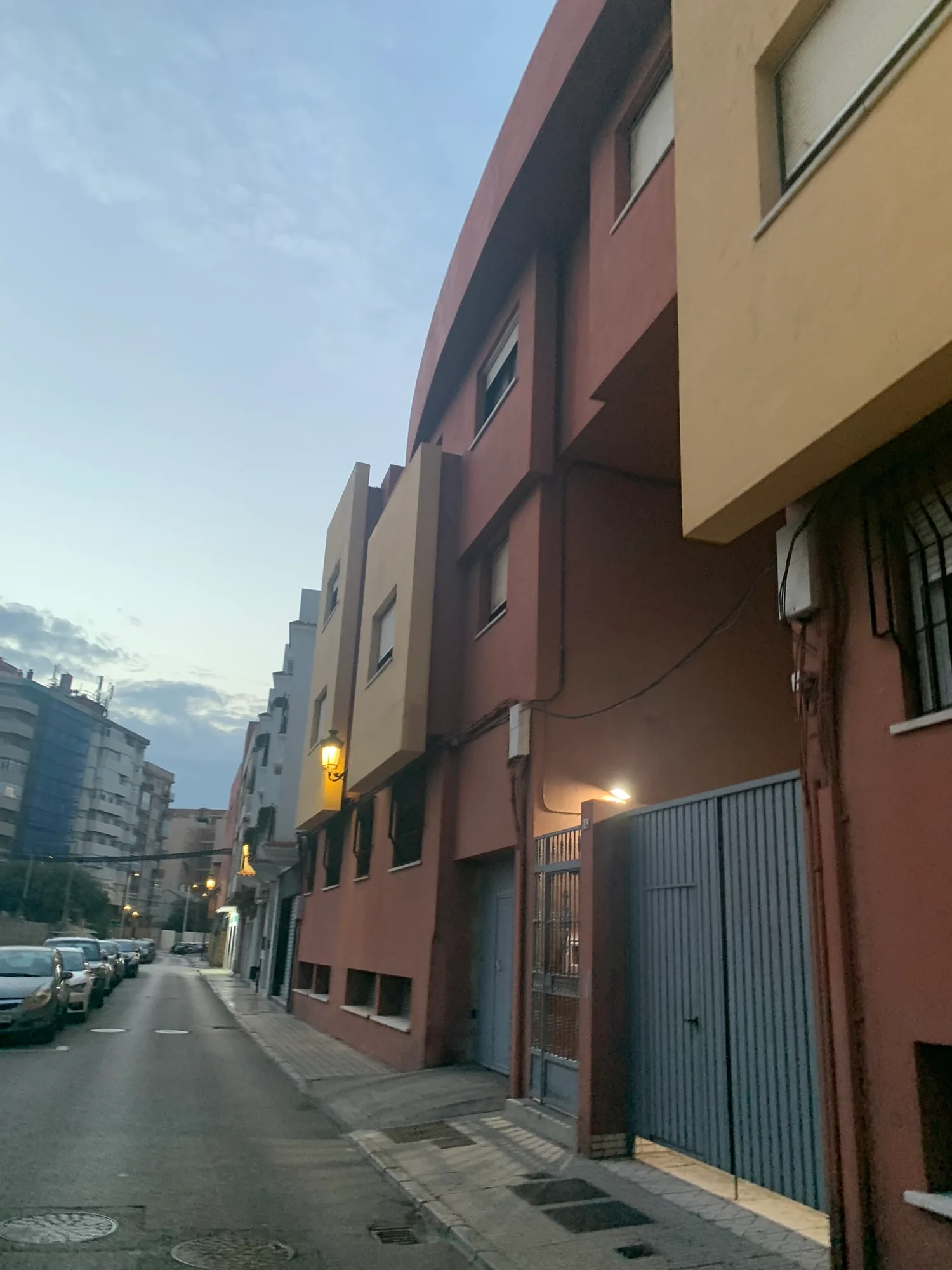
This is one of the poorer corners of Spain, with the kind of unemployment figures that explain why a Gibraltar wage is worth crossing a queue for. You see it in the town: blocks that have seen better decades, shutters down on shopfronts, a centre that is lived-in rather than restored. A few kilometres up the coast sit Sotogrande and Alcaidesa, all marinas and golf and money, and the contrast with La Línea is stark enough to be its own kind of lesson about this coast. La Línea is the working town the wealthy enclaves are built next to, not the enclave itself. Knowing that saves you the disappointment of arriving expecting Marbella.

So why does anyone stay?
Because the things that are good here are genuinely good, and they are not for sale in a gift shop. The beaches are long and open and look straight at the Rock. The fish was in the bay this morning. The climate is milder than the furnace of inland Andalusia, and a glass of something cold on a plaza terrace at sunset costs what a coffee costs elsewhere. The town is unpolished, which also means it is unpriced and unhurried, and for a certain kind of person — the settler with practical questions rather than the tourist with a checklist — that is exactly the appeal. You are not being sold anything here. That is rarer than it sounds.
How to read the rest of this site
Everything else we write assumes this baseline: a real town, honestly described, neither talked up nor talked down. If you are thinking of moving here, start with Moving & Living. If you are coming to see Gibraltar and wondering what is on the Spanish side, the Visit guide is the place to begin. La Línea rewards people who arrive understanding what it is. Now you do.
Historical detail correct to the best of our knowledge as of June 2026. Where local memory and the written record disagree, we say so and let local memory stand.