What to Do in La Línea de la Concepción: A One-Day Guide
La Línea de la Concepción is worth more than the walk to Gibraltar, but it works best when you stop looking for a miniature Seville and use the town that is actually here. In one day you can cross the centre on foot, see the work of La Línea’s best-known painter, choose a beach according to the wind, walk the marina and finish among the fishing streets of La Atunara.
This is a practical route for a full day in La Línea, or a half-day if you are crossing from Gibraltar and want to eat, walk and see something beyond the frontier car parks.
Is La Línea de la Concepción worth visiting?
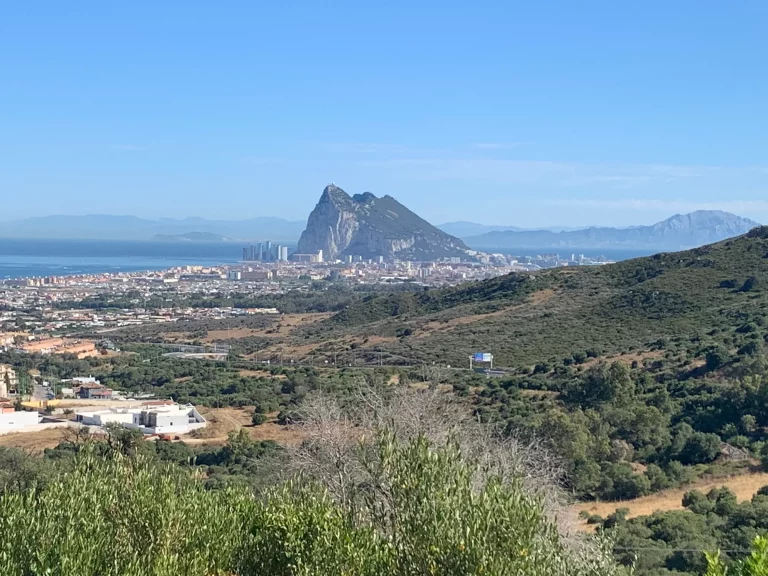
Yes, if you want a working Andalusian border town rather than a polished monument circuit. La Línea has no Alhambra waiting behind the bus station. It has a compact pedestrian centre, two very different coasts, an unusually good local art museum and the Rock appearing at the end of streets where it has no business fitting.
The town is also easy. Most of this route is walkable, the centre is flat and the Gibraltar frontier sits beside the bus station and the municipal tourist office. A visitor can arrive without learning a transport system first, which is a small luxury in southern Spain.
Start at the Gibraltar frontier
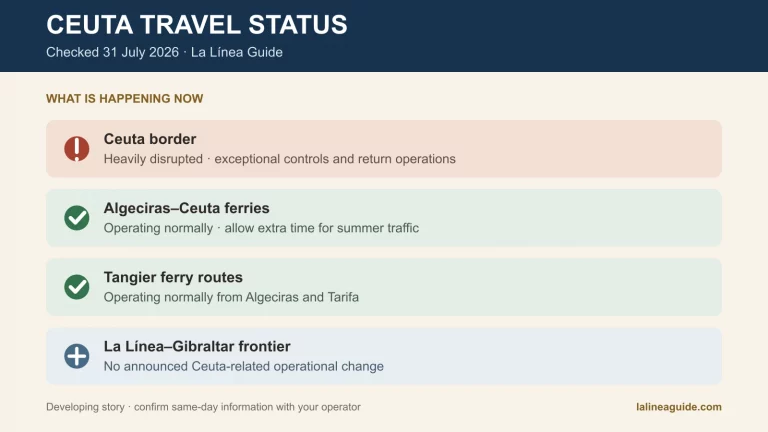
If you are coming from Gibraltar, cross on foot and begin at the Spanish side of the frontier. The municipal tourist office is on Avenida Príncipe de Asturias, opposite the crossing, and it is the sensible place to ask about exhibitions, closures and anything that has changed since this guide was checked.
From here, walk towards the centre rather than following the traffic. The official municipal visitor route runs through the old Istmo/Comandancia building, Plaza Cruz Herrera, Calle Real, Plaza de la Iglesia and Plaza Fariñas before reaching the Cruz Herrera Museum. None is a grand expedition. Together they explain the town better than a list of monuments would.

Walk Calle Real and the central plazas
Calle Real is the town’s everyday spine: shops, cafés, people doing errands and tables that become more important as lunch approaches. Plaza de la Iglesia gives you the parish church of the Inmaculada Concepción, while Plaza Fariñas and Plaza Cruz Herrera provide the sort of shaded pause that an August pavement eventually makes compulsory.
Look up as you walk. The surviving colonial houses and older civic buildings are modest beside Gibraltar’s military architecture, but that contrast is the point. La Línea grew quickly around the frontier and still looks like a town assembled by trade, movement and families who needed somewhere to live, not by a tourism board drawing a historic quarter with a ruler.
If you want the longer version of that story, read what La Línea actually is. For today, the centre works as it should: slowly, with coffee.
Visit the Cruz Herrera Museum
The Museo Cruz Herrera is the cultural stop worth building the day around. José Cruz Herrera was born in La Línea in 1890, trained in Seville and Madrid, and worked across Europe and Morocco. The museum in Villa San José carries the portraits, landscapes and North African influence back into the town where he started.
The collection is manageable in one visit, which is praise. You can see the portrait rooms and the Moroccan work without turning the day into museum endurance. The building and gardens also make a cooler break from the centre in summer.
The museum normally opens Tuesday to Sunday in the morning, with additional weekday afternoon hours that change between summer and winter; Mondays are closed. Check the official museum page before travelling, because a useful guide tells you where to verify the door rather than pretending doors never change.
Choose the beach the wind has chosen
La Línea has a Mediterranean side and a bay side, and treating them as one beach is how visitors end up arguing with the weather.
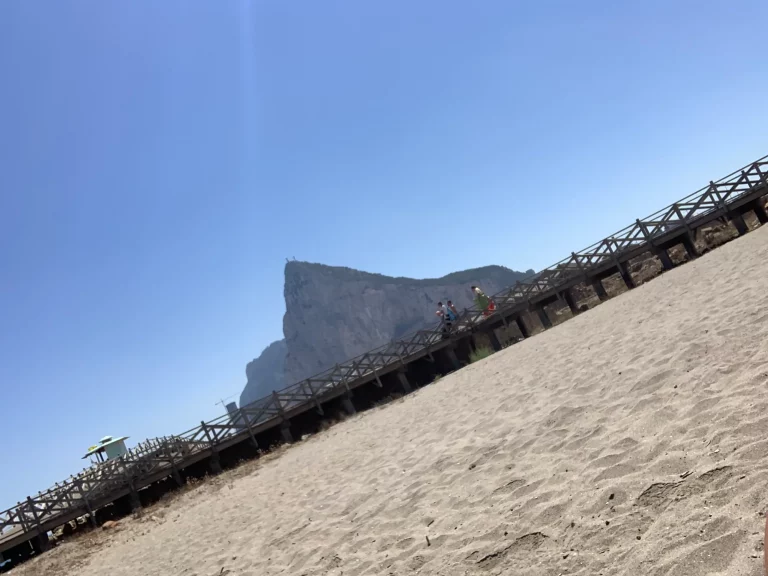
Playa de Levante is the long, open stretch with the Rock behind it. It has space, proper sea and the best long walk, but the east wind can turn the sand into ammunition. Playa de Poniente faces the Bay of Gibraltar and is usually the calmer choice, especially with children or when Levante is blowing hard.
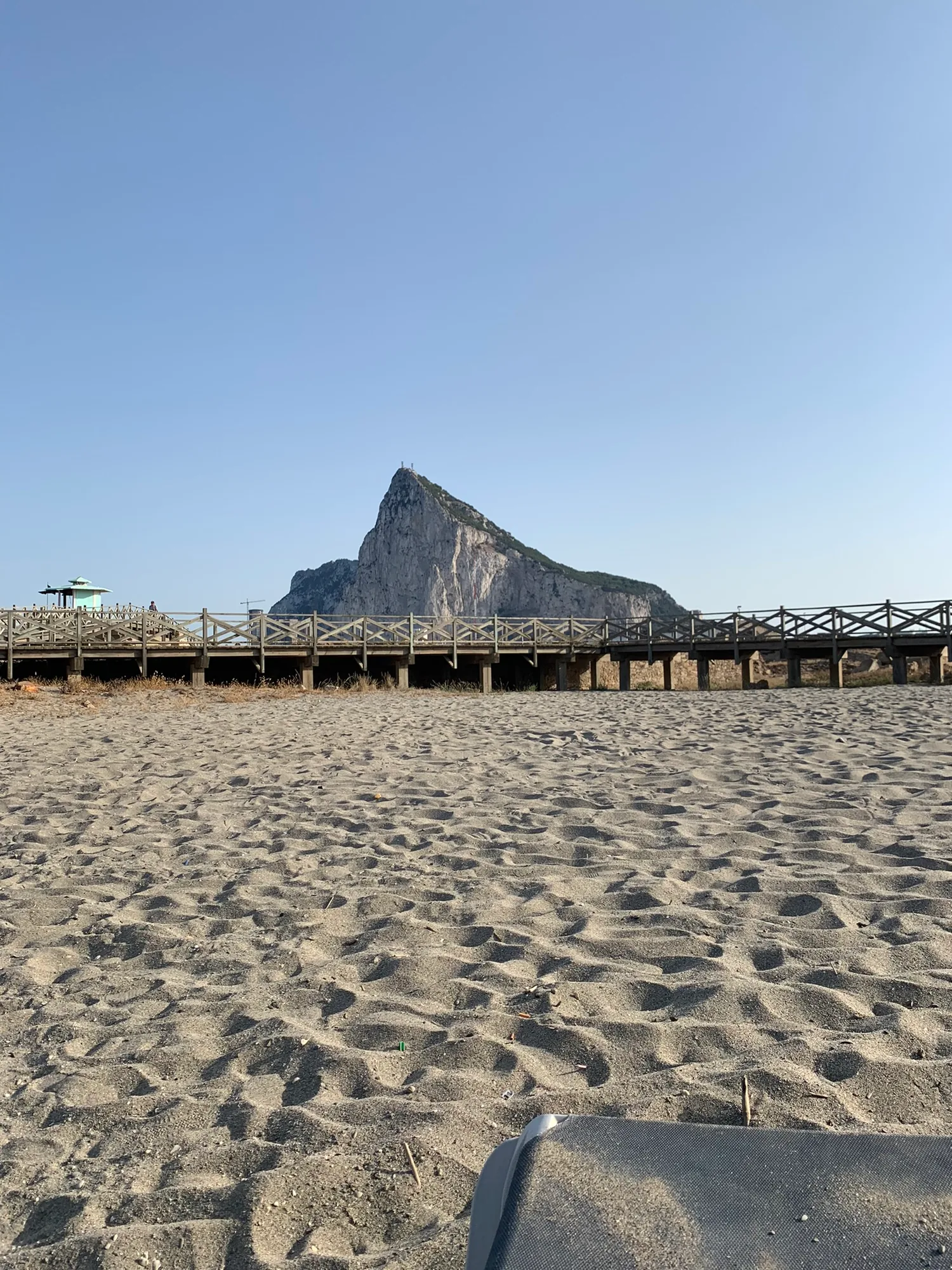
Our guide to Playa de Levante and Playa de Poniente covers the difference in full. For a one-day visit, check the wind and choose one. Crossing town to prove a forecast wrong is stubbornness at its finest.
Walk the marina and the promenade
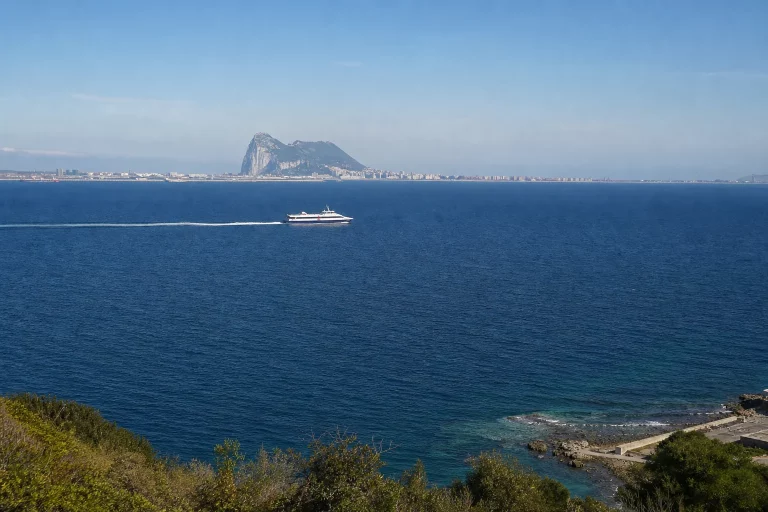
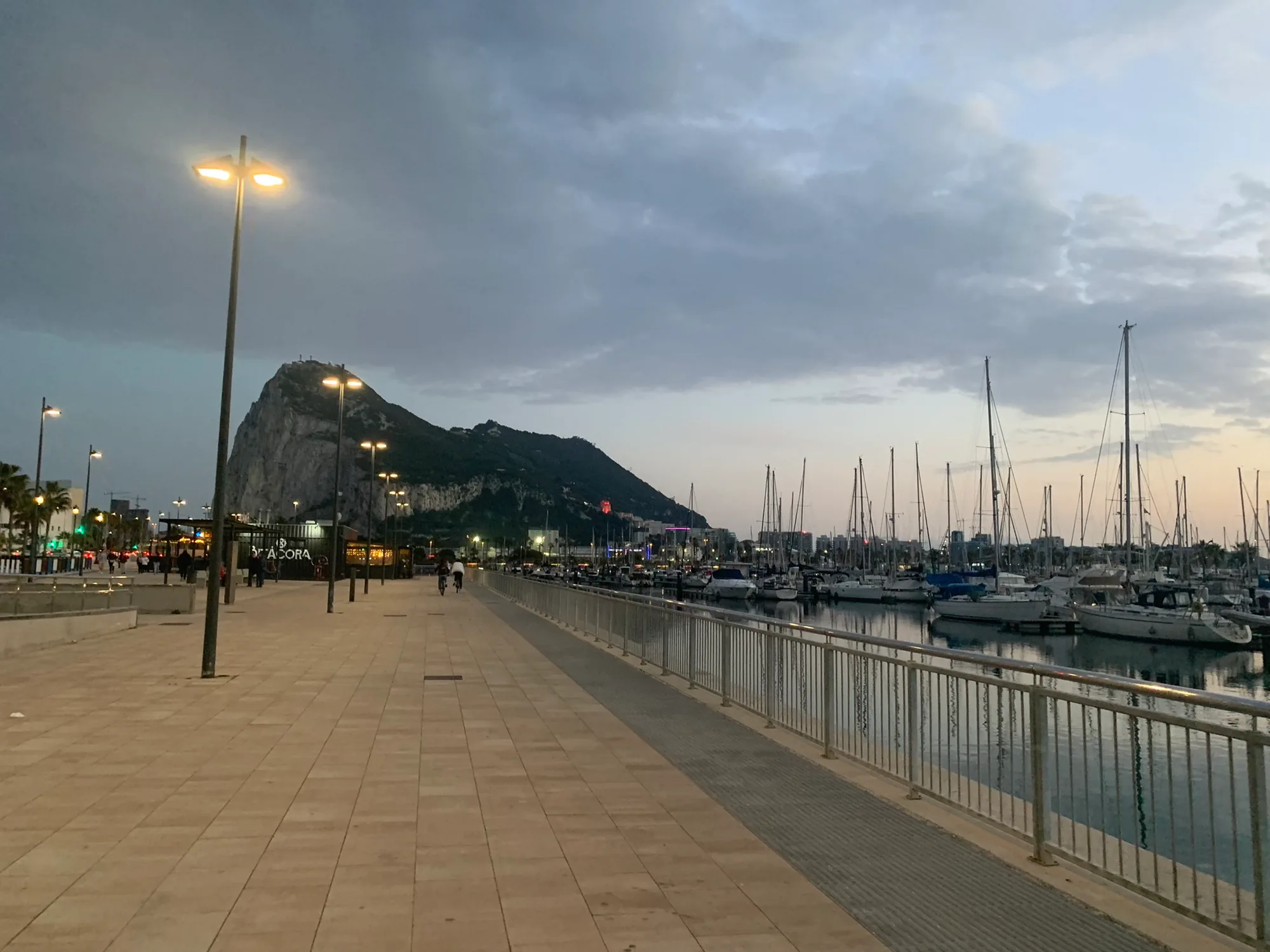
The marina and western promenade are where La Línea opens into the Bay. Boats, palms, anchored ships and Gibraltar occupy the same view, with enough space between them to make the border feel less important for half an hour.
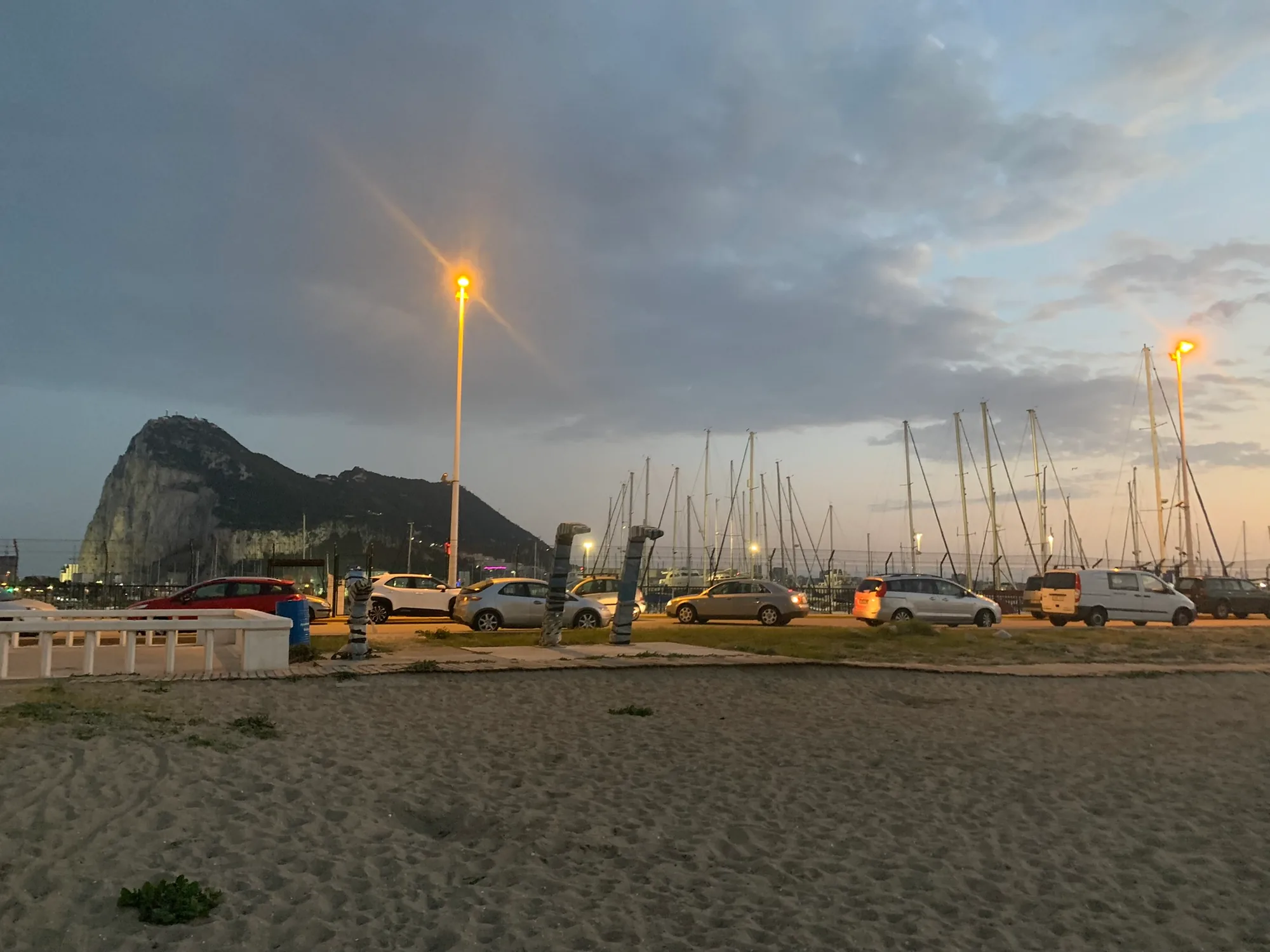
This is the easiest part of the day to leave unplanned. Walk until the light improves, stop for a drink, then decide whether you want the centre again or the fishing quarter. Around sunset the Rock stops being a landmark and becomes the whole backdrop, which is unfair but effective.
Finish in La Atunara
La Atunara is not a themed fishing quarter. It is a fishing district that still works, with low houses, narrow streets, the church of Nuestra Señora del Carmen, the port and the old almadraba buildings carrying the shape of the trade.
The distinction matters. Walk, eat fish, look at the boats and remember that nets, winches and working premises are not visitor props. The city council describes La Atunara as fishing and ethnological heritage; the heritage survived because people kept using it.
For lunch, choose somewhere busy and look for the day’s fish rather than a translated menu promising a generic Spanish experience. We do not name restaurants we have only researched online. That rule costs us easy listicles and saves readers from quite a lot of fiction.
A realistic one-day itinerary
- Morning: start at the frontier tourist office, then walk through Calle Real and the central plazas.
- Late morning: visit the Cruz Herrera Museum.
- Lunch: eat in the centre or continue to La Atunara for fish.
- Afternoon: choose Levante or Poniente according to the wind.
- Evening: walk the marina and promenade as the light drops.
If you only have half a day, keep the centre, museum and one waterfront. Do not sprint through both beaches and La Atunara to complete a checklist nobody asked for.
Practical questions about visiting La Línea
Can you walk to La Línea from Gibraltar?
Yes. The land frontier is beside La Línea’s bus station and municipal tourist office, and the central route begins on the Spanish side. Carry the identification appropriate to your nationality and status even when routine land-frontier checks are not taking place.
Do you need a car for La Línea?
No for this itinerary. The frontier, centre, museum and western waterfront work well on foot. A car is useful for the northern end of Levante or trips farther along the coast, but it creates a parking problem before it solves a distance problem.
If you are arriving by car to visit Gibraltar as well, use our guide to parking in La Línea near the frontier.
How long should you spend in La Línea?
A half-day covers the centre, museum and one seafront. A full day lets you add a beach, lunch without watching the clock and the marina at dusk. Staying overnight makes sense if La Línea is your base for Gibraltar or the wider Campo de Gibraltar rather than a single stop.
What is the best thing to do in La Línea?
There is no single monument that carries the town. The best version is the combination: central streets in the morning, Cruz Herrera before lunch, sea in the afternoon and the Rock changing shape as you walk. La Línea makes sense as a day, not a trophy.
Checked 28 August 2026. Museum times, exhibitions and temporary closures can change; verify them with the municipal tourist office or the official venue before making a special journey.
Sources: La Línea City Council Tourism; Museo Cruz Herrera; municipal visitor route; La Atunara heritage; Andalucía tourism guide.