Is La Línea Safe? What Ceuta and Recent Boat Arrivals Mean for Visitors
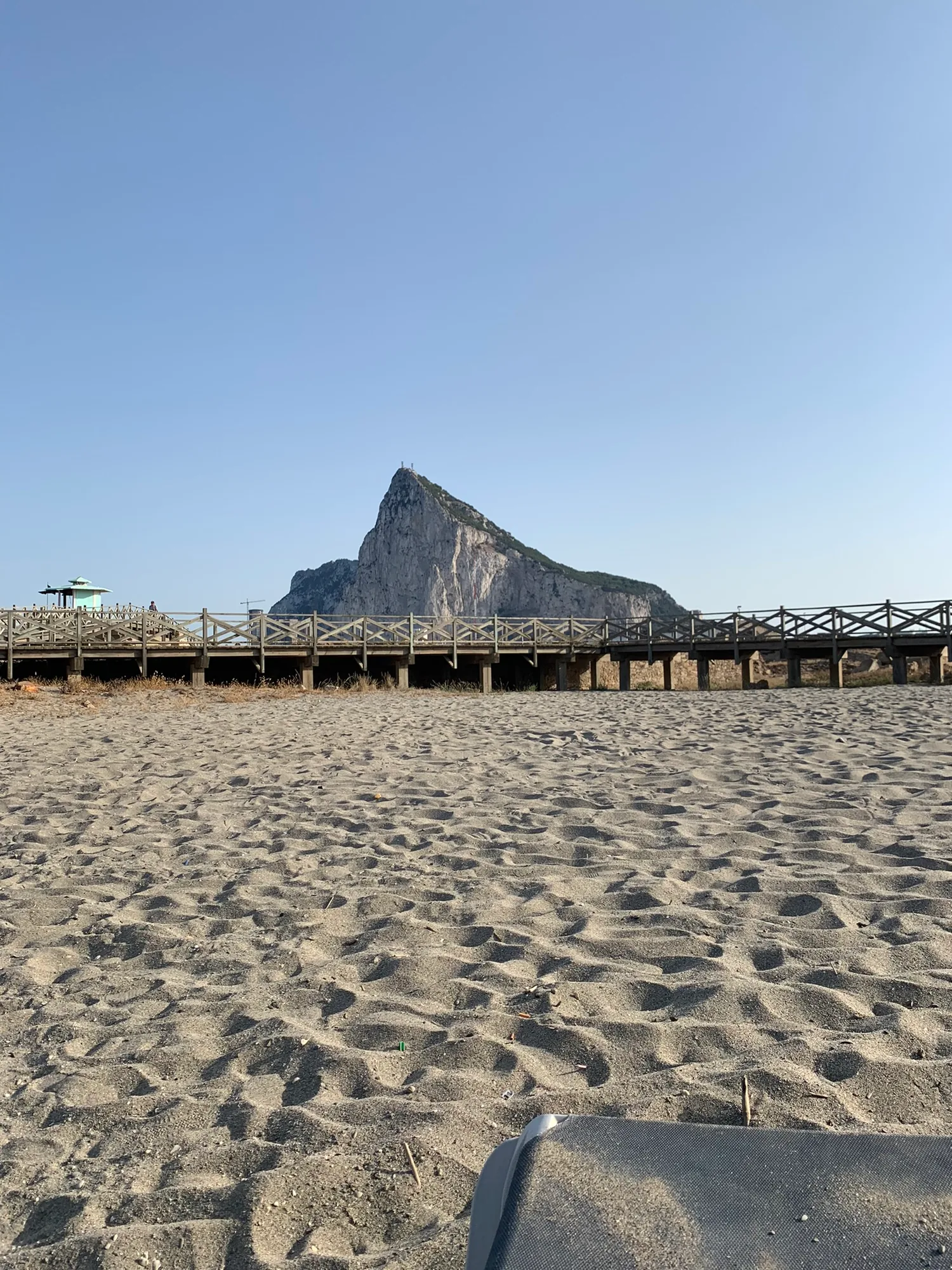
Status: Active — checked 10 August 2026. La Línea remains a normal place to stay, eat, use the beach and walk into Gibraltar. Recent scenes from Ceuta are serious, and small groups have reportedly reached beaches around the Campo de Gibraltar, including Playa de Levante. Those two facts belong in the same article, but they do not add up to a reason to cancel a visit.
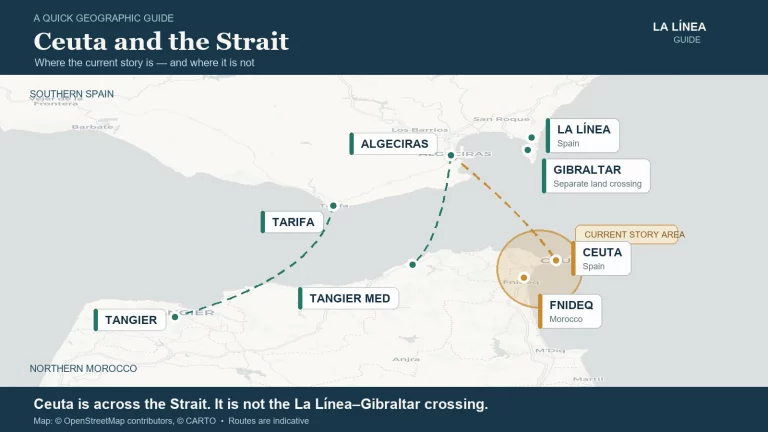
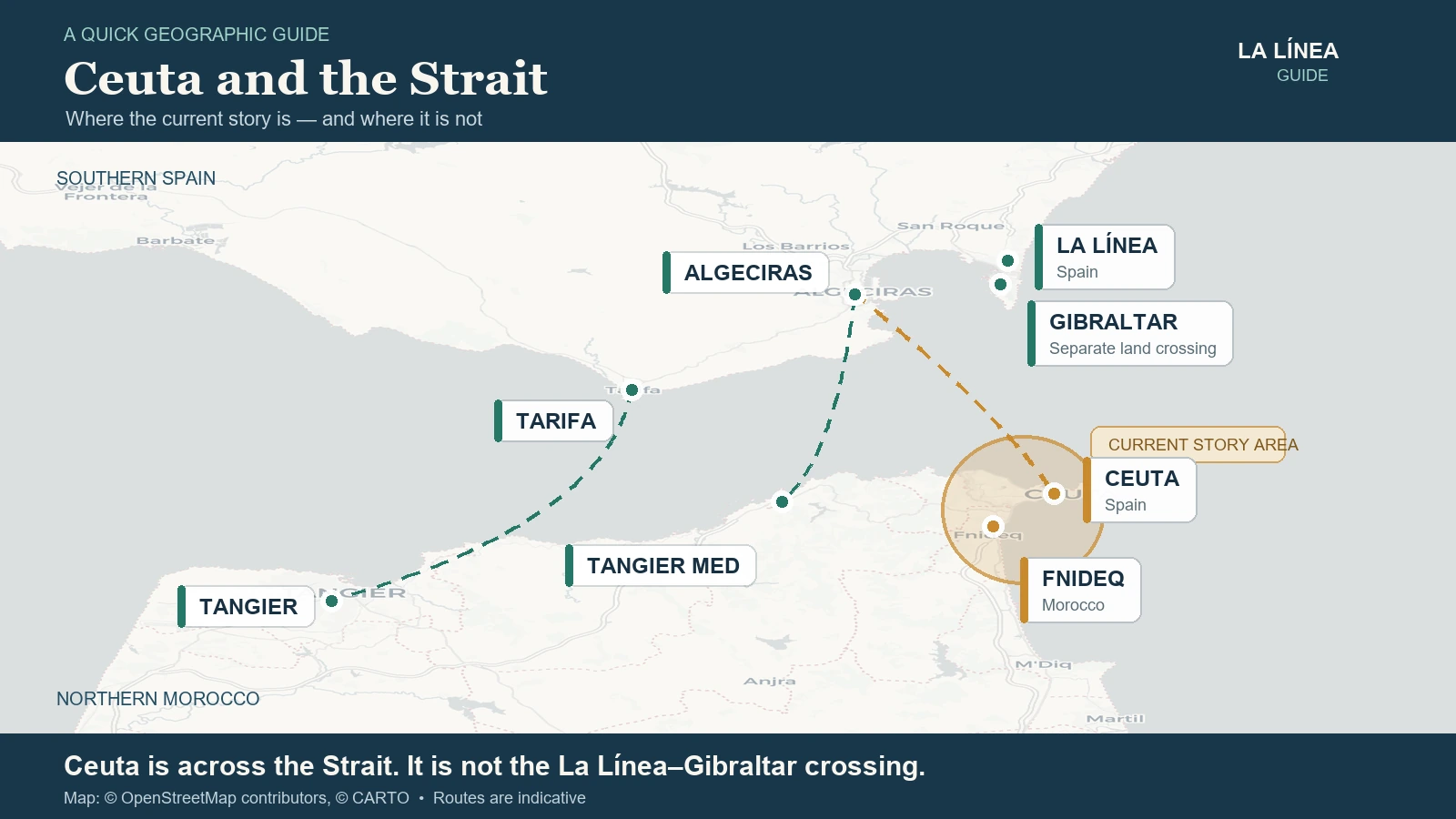
If you are arriving through Gibraltar and have seen videos of thousands of people at a fence, the first thing to fix is the geography. Those images were filmed in Ceuta, the Spanish city across the Strait on the North African coast. They were not filmed at the La Línea–Gibraltar frontier. A few later boat landings on this side of the water are real local incidents; they are not the Ceuta crowd moving into La Línea.
What happened in Ceuta?
At the end of July, tens of thousands of people crossed or attempted to cross from Morocco into Ceuta, many by swimming around the Tarajal breakwater. The official estimates changed as people returned and the authorities reconciled counts. Associated Press later reported an estimate of roughly 72,000 arrivals over several days, followed by the return of most adults; around 2,000 people, including about 1,000 unaccompanied minors, were reported to remain in Ceuta in early August (Associated Press, 4 August 2026; Associated Press, 5 August 2026).
It was a humanitarian emergency and a failure of capacity. People died in the water, families searched for missing relatives and Ceuta had to improvise shelter and care for far more people than its services were built to receive. Online rumours appear to have helped drive the movement, while the wider political explanations remain disputed. This guide will not turn an unsettled investigation into a neat conspiracy because neat conspiracies travel faster than ferries.
Have boats reached La Línea and the Campo de Gibraltar?
Yes, on a small scale. On 2 August, El Mundo reported that police had located around twenty people after several landings in the Campo de Gibraltar. Five were intercepted around La Ballenera, Getares and Punta Carnero in Algeciras, while another small group reportedly reached Playa de Levante in La Línea. The people found were placed with the National Police immigration unit; no special instructions were issued to residents of the coastal areas (El Mundo, 2 August 2026).
The connection with Ceuta is plausible but not proven boat by boat. The Strait has long had small-vessel and jet-ski crossings, and the Campo de Gibraltar is watched precisely because routes change when enforcement changes. A landing after the Ceuta crisis may have started in Ceuta, elsewhere on the Moroccan coast or through an organised smuggling route; police investigate that part.
Before the landings, Europa Sur described the most likely consequences for this comarca: extra pressure on the Port of Algeciras, police, the Guardia Civil, Red Cross teams and reception services, rather than a copy of the Ceuta mass arrival on local beaches (Europa Sur, 30 July 2026). That distinction has held. A few small boats are worth reporting; they are not a population movement through the streets of La Línea.
Is La Línea safe for tourists right now?
For an ordinary visit, yes — with the same qualification that belongs in any honest travel guide: no town can promise that nothing unpleasant will happen. There has been no announced Ceuta-related restriction at the La Línea–Gibraltar crossing, no instruction for visitors to avoid the town and no evidence that the reported landings have produced a general threat to tourists.
The latest municipal crime data predates the Ceuta crisis, so it cannot prove what happened in August. It does give a useful baseline. In the first quarter of 2026, La Línea recorded no completed homicide, while reported robbery with violence fell from five cases to two, burglaries fell from six to five and thefts fell from 65 to 56 compared with the same period in 2025. Total recorded crime rose by 15.5%, driven heavily by cybercrime, which rose from 59 to 107 cases; conventional crime rose by 6.1% (Spanish Interior Ministry, first-quarter 2026 crime balance, p. 21).
Those figures do not describe paradise, and they do not support panic either. The most useful precautions for a visitor remain ordinary ones: keep a phone and wallet secure in busy areas, do not leave visible luggage in a parked car, avoid isolated stretches of beach late at night and respect red flags when the levante makes the sea dangerous. The sea is normally the least impressed by political arguments.
Police capacity has also increased for the summer. Fifty trainee National Police officers joined the La Línea station in July, with another 54 assigned to Algeciras (Radio Algeciras/Cadena SER, 17 July 2026). That reinforcement was announced before the Ceuta emergency, but it is present during it.
What happens when a small boat reaches the beach?
The first response is an emergency operation, not a public-order spectacle. Guardia Civil, National Police, local police, Salvamento Marítimo and medical or Red Cross teams may all be involved depending on where the boat is detected and whether anybody is still in the water.
The sequence varies, but it normally includes:
- locating people who have landed and checking whether anybody remains at sea;
- urgent treatment for dehydration, hypothermia, injuries or other medical needs;
- identification and a police process under immigration law;
- checks for children, families, possible trafficking victims and people who may need international protection;
- transfer to the appropriate police, reception, child-protection or removal procedure.
Red Cross emergency teams are trained to provide clothes, blankets, food, hygiene supplies and first health care at coastal arrivals, while flagging children and other vulnerable people for separate attention (Spanish Red Cross, coastal emergency response). Unaccompanied minors enter the child-protection system rather than the adult immigration route. An adult may be returned, transferred, released into a reception programme or allowed to pursue an asylum claim; the result depends on nationality, identification, vulnerability and the individual legal case.
This is why a short police presence on a beach can look larger than the incident. Several services arrive because the work is divided between rescue, health, identification and safeguarding. The number of uniforms is not a headcount of danger.
What should you do if you see a boat landing?
Keep a sensible distance and call 112, the general emergency number, or 062 for the Guardia Civil. Give the beach name, the nearest access point or chiringuito, the direction of travel and whether anybody appears injured or remains in the water.
Do not chase the boat, block people on the beach or enter rough water. Do not turn injured or frightened people into close-up social-media footage while the emergency services are trying to work. If somebody needs immediate first aid and it is safe to help, follow the operator’s instructions until responders arrive.
For the rest of the day, follow any temporary cordon and use the next beach access. These operations are normally localised. Playa de Levante is several kilometres long; a police response at one end does not mean the whole waterfront or the route into Gibraltar has closed.
How could Gibraltar be affected?
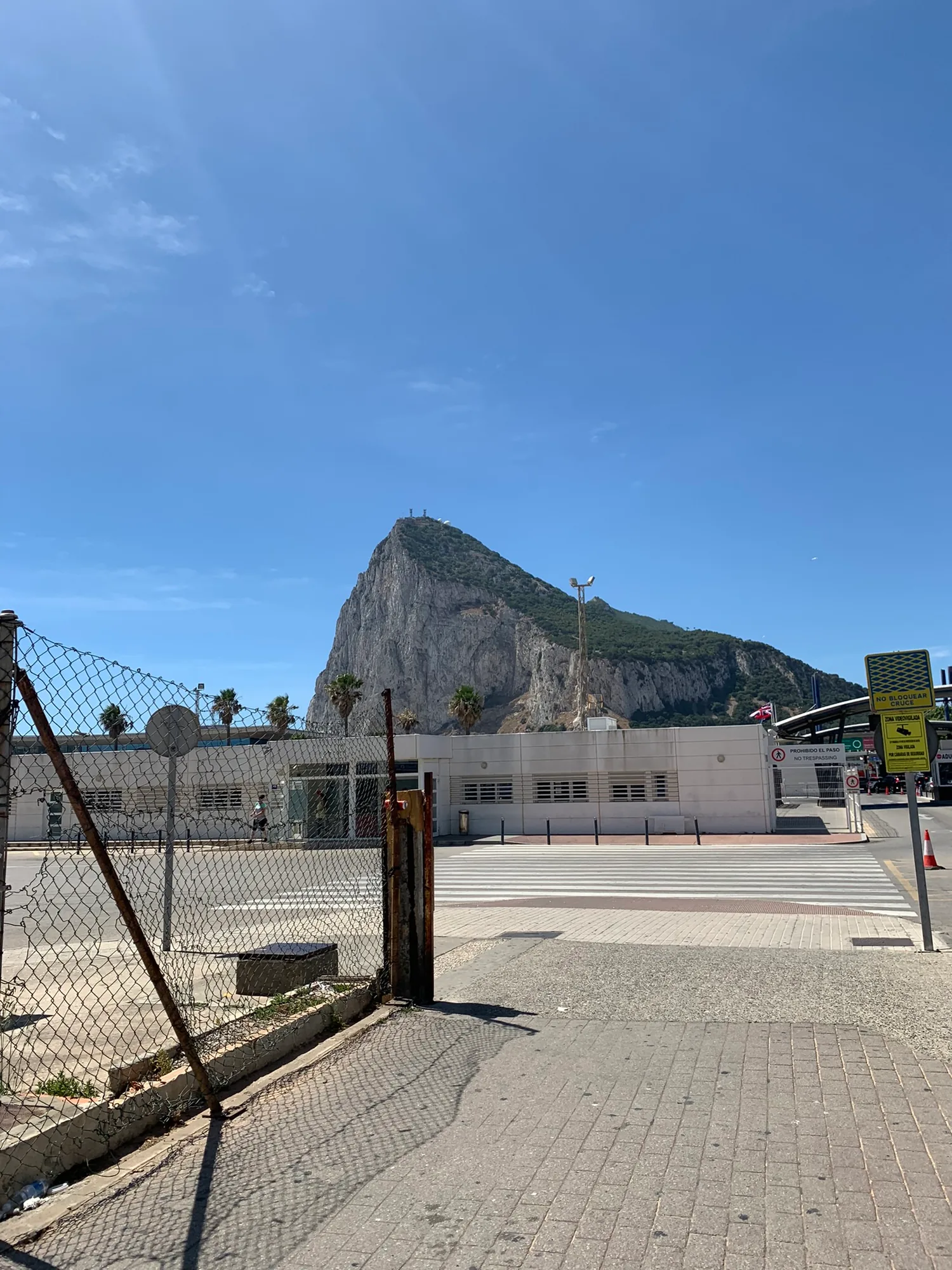
At the moment, mainly through vigilance rather than disruption. No Ceuta-related change has been announced at the La Línea–Gibraltar frontier, and the crossing continues under the post-15 July arrangements explained in our updated Gibraltar border guide.
Gibraltar sits beside established routes across the Strait, but it is not usually the destination. Gibraltar’s official 2025 National Risk Assessment says cases in which boats carrying migrants end up in British Gibraltar Territorial Waters are isolated and generally involve weather or vessel problems. It assessed the local risk from migrant smuggling and human trafficking as low (Government of Gibraltar, National Risk Assessment 2025, pp. 29–30).
If crossings increased, the first effect would probably be on the water: more surveillance and possible rescue or interception work for HM Customs Marine, the Royal Gibraltar Police and other emergency services. A live operation could briefly affect one marina entrance or section of coast. It would not by itself mean that Main Street, the airport or the pedestrian frontier had become unsafe.
The land crossing could take longer if officers introduced extra checks after a specific incident, but that would be an operational decision rather than an automatic consequence of events in Ceuta. The new frontier arrangements did not remove immigration and security controls. Gibraltar’s government has already corrected online claims that the airport or frontier provides a way around visa rules (HM Government of Gibraltar, 22 July 2026).
For a visitor, the useful distinction is simple. A police launch in the Bay or an ambulance at a marina is a local operation; it is not evidence that flights, shops, buses or the walking route from La Línea have stopped. Allow a little extra time if an incident is visibly in progress, follow Gibraltar Borders and Coastguard or police instructions, and ignore forwarded messages that do not link to an official notice.
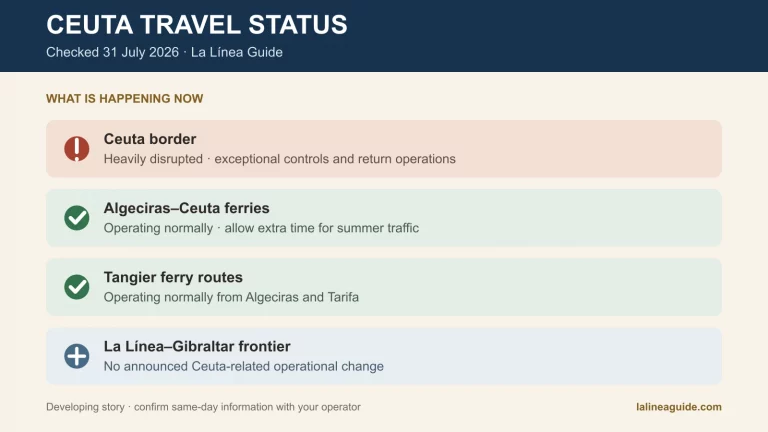
The Algeciras–Ceuta ferry is a separate journey. During the height of the Ceuta emergency, all three operators on that route continued running normally, as did the Algeciras–Tangier Med and Tarifa–Tangier Ville services (Radio Algeciras/Cadena SER, 31 July 2026). Port roads can still be busy during Operación Paso del Estrecho, which is a summer traffic issue rather than evidence that a ferry has stopped.
If Ceuta is part of your trip, read the dated Ceuta travel update, the background explainer and our La Línea and Gibraltar to Ceuta ferry guide. If you are only visiting Gibraltar from La Línea, Ceuta remains a separate route across the water.
Is La Línea safe? Quick answers
Should I cancel a Gibraltar trip because of Ceuta?
No current evidence supports cancelling an ordinary La Línea or Gibraltar visit because of the Ceuta crisis. Check again if your itinerary includes Ceuta itself.
Are large groups moving through La Línea?
No mass movement through La Línea has been reported. A local report described around twenty people found after several Campo de Gibraltar landings, including a small group on Playa de Levante.
Are the La Línea beaches closed?
No general Ceuta-related beach closure has been announced. A specific police or rescue operation may temporarily affect one access point or section of coast.
Is the Gibraltar border operating normally?
Yes. No Ceuta-related restriction has been announced at the La Línea–Gibraltar crossing.
Could Gibraltar’s port or waters be affected?
They could see more patrol, rescue or interception activity if small-boat crossings increase. Any restriction would normally be local to the incident; no general disruption has been announced.
What number should I call if I see a boat or somebody in difficulty?
Call 112 for an emergency or 062 for the Guardia Civil. Give an exact location and say whether anybody remains in the water.
Does a migrant landing mean the area is dangerous?
No. It means an immigration and possible rescue incident is taking place. Keep clear of the operation and follow police instructions, as you would for any coastal emergency.
Checked 10 August 2026. This article distinguishes confirmed reporting from inference and will need a dated update if official travel advice, ferry operations, the Gibraltar crossing or the local security situation changes materially.
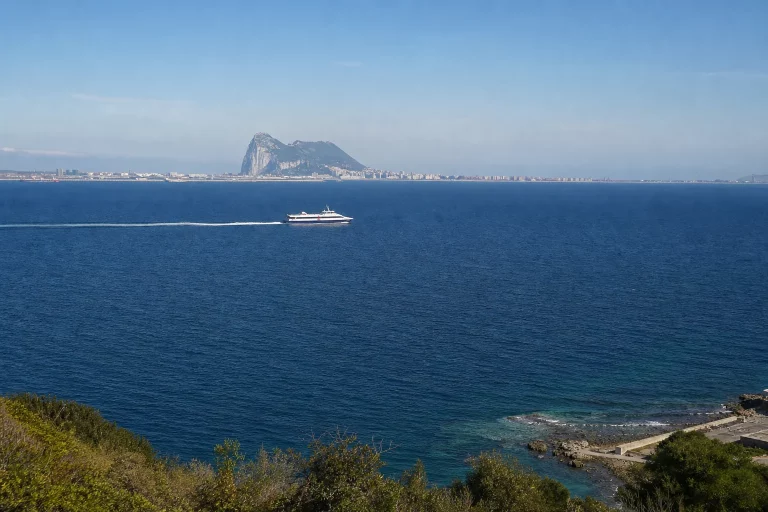
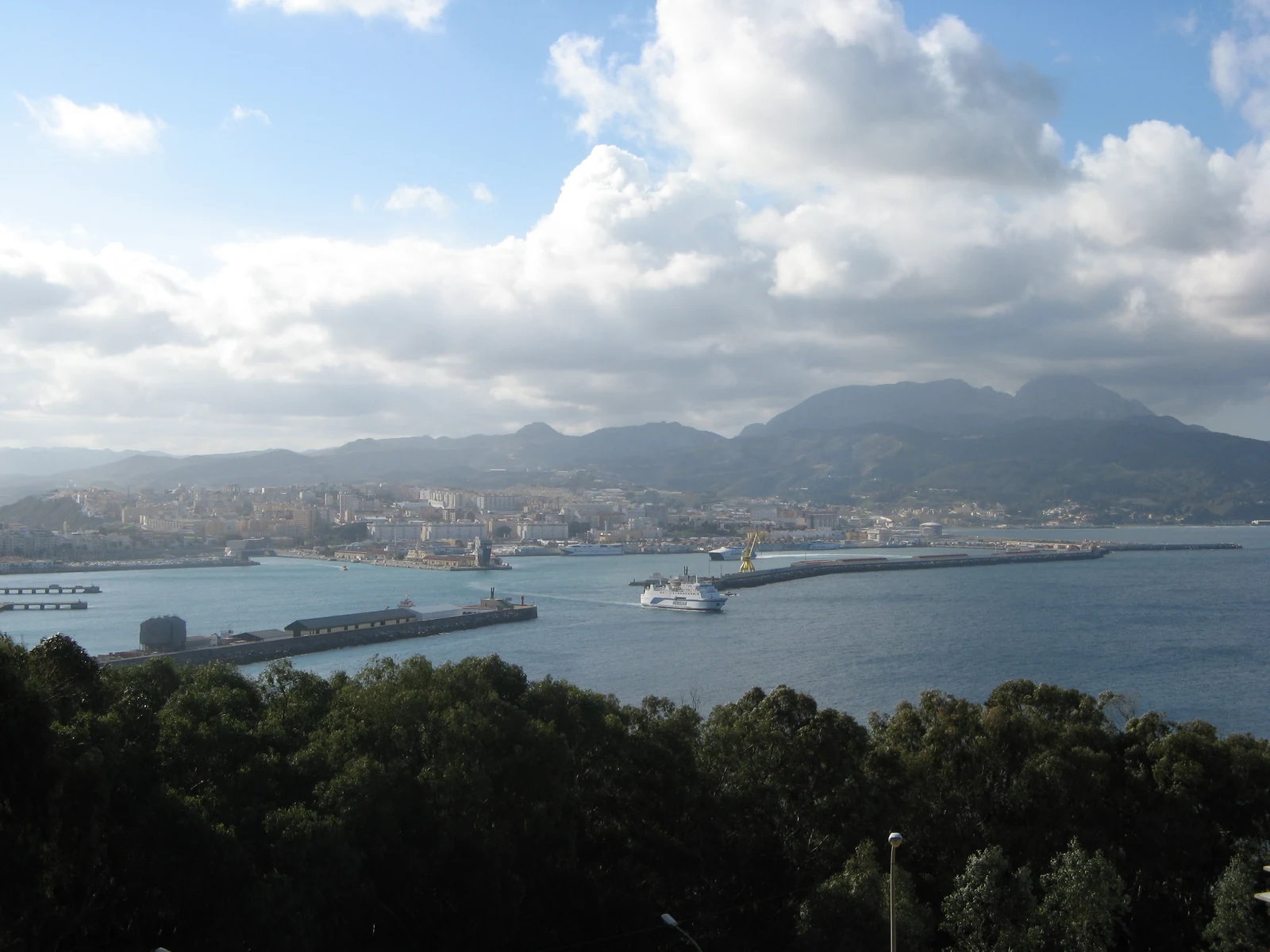
From the Upper Rock, Ceuta looks close enough to touch on a clear day. The Strait still has rules of scale: what is visible is not always what is happening on your street.