Gibraltar Border Opening: What Changed on 15 July 2026
Status: Active — post-opening update. The UK–EU treaty covering Gibraltar was signed on 14 July 2026 and began provisional application on 15 July. Routine immigration and customs checks ended at the La Línea–Gibraltar land frontier that morning. This page was originally published before the change; it has now been rewritten around what happened, what the first weeks showed and which rules still matter.
The short version
- What changed
- Routine immigration and customs checks at the La Línea to Gibraltar land frontier ended when the treaty began provisional application on 15 July 2026.
- Do you still need ID
- Yes, carry valid identification. Routine checks have ended, but entry, visa and residence requirements still apply and police can ask.
- Shopping allowances
- For the first three years, €300 travelling by land and €430 by sea or air. Above that, tax and declaration rules apply.
- EES
- No routine EES checks at the land frontier. Schengen checks happen at Gibraltar’s airport and, where needed, its port.
- What has not changed
- Congestion. Two compact towns sharing one narrow approach still produce queues; they are traffic queues now rather than passport queues.
On this page:
What changed at the Gibraltar border on 15 July? ·
Do you still need a passport or identity card? ·
If you live in La Línea and work in Gibraltar ·
If you are visiting Gibraltar from Spain ·
What happened to EES and the new security system? ·
What changed for shopping and goods? ·
What the first weeks showed ·
Gibraltar border opening: quick answers
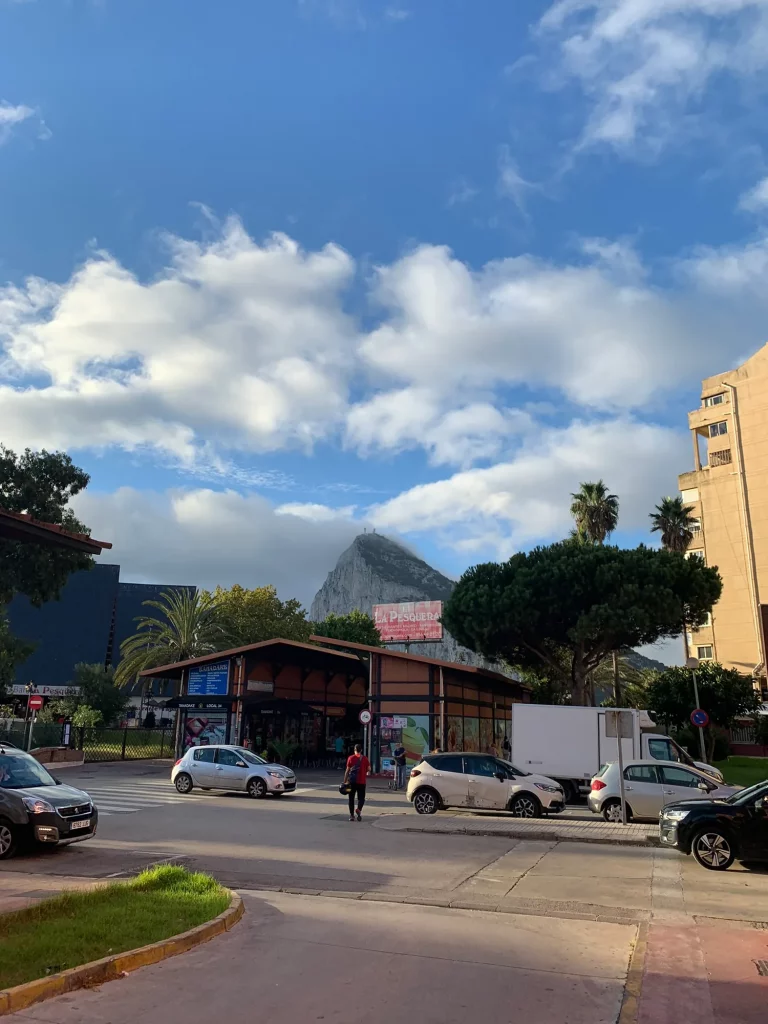
The Gibraltar border opening happened on schedule. The gates came down, the routine passport booths stopped operating and people began moving between La Línea and Gibraltar without the old immigration queue. That is the large change. The smaller truth is that an open frontier still has roads, documents and occasional congestion — bureaucracy lost its booth, not its appetite.
This guide covers both sides of the crossing: the roughly 15,000 frontier workers whose working day passes through it and visitors arriving from Spain for a few hours on the Rock.
What changed at the Gibraltar border on 15 July?
The treaty was signed in Brussels on 14 July and provisionally applied the next day. Gibraltar and the UK described the start of free flow at the land frontier, while the Spanish government marked the change with the demolition of the old fence (GOV.UK, 14 July 2026; HM Government of Gibraltar, 15 July 2026; La Moncloa, 15 July 2026).
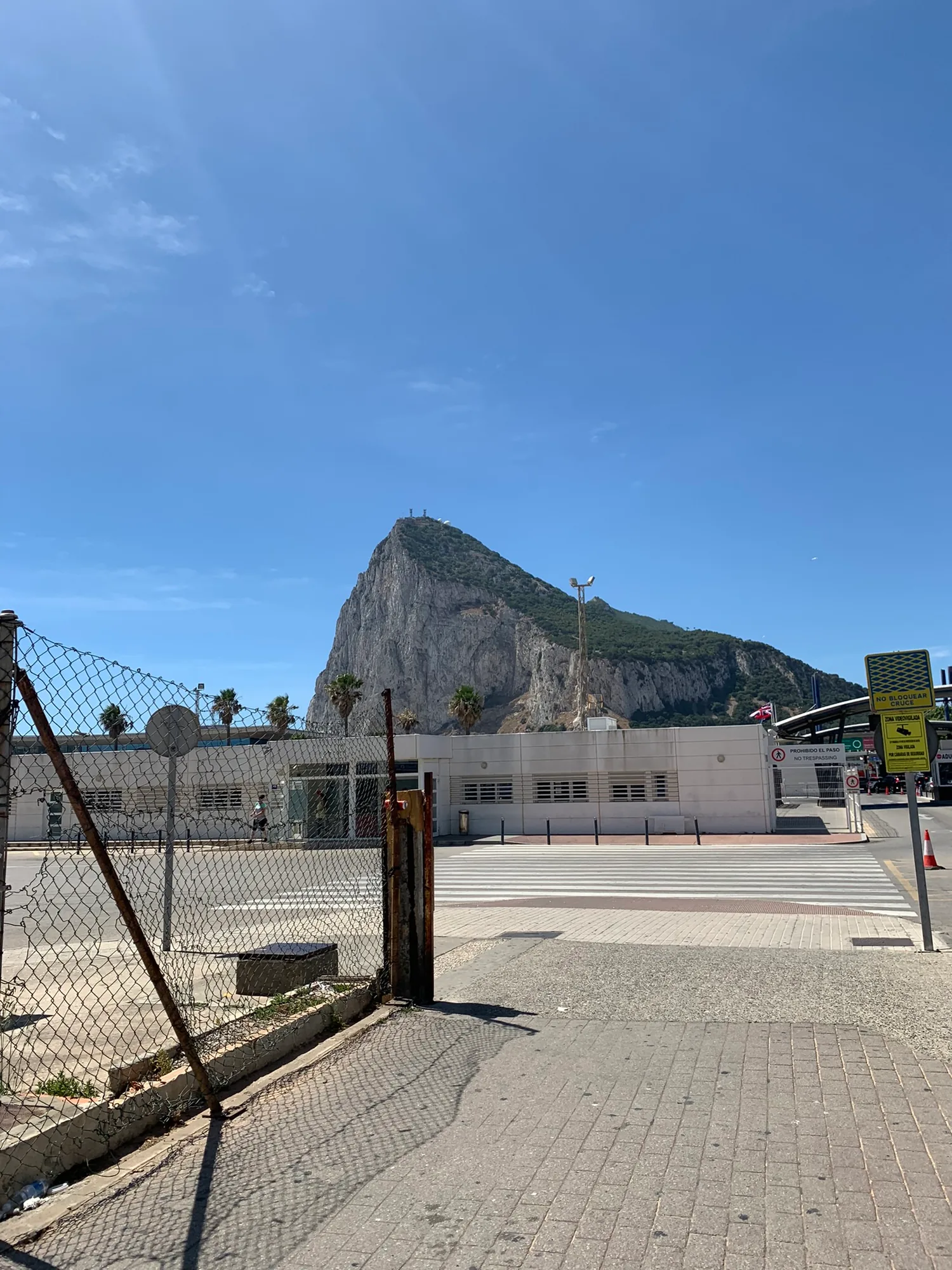
For somebody walking or driving from La Línea, the practical change is simple: there is no longer a routine immigration or customs stop at the land crossing. The legal boundary remains where it was, Gibraltar remains British and Spain still begins on the other side. The control system moved; sovereignty did not.
People arriving in Gibraltar by air or sea meet a different arrangement. Gibraltar officers continue their own checks and Spanish officers carry out Schengen checks at the airport and, where needed, the port. A person cleared there can then move into Spain without another routine check at La Línea. The land crossing became fluid because the external-border work was moved elsewhere, not because entry rules were cancelled.
Do you still need a passport or identity card?
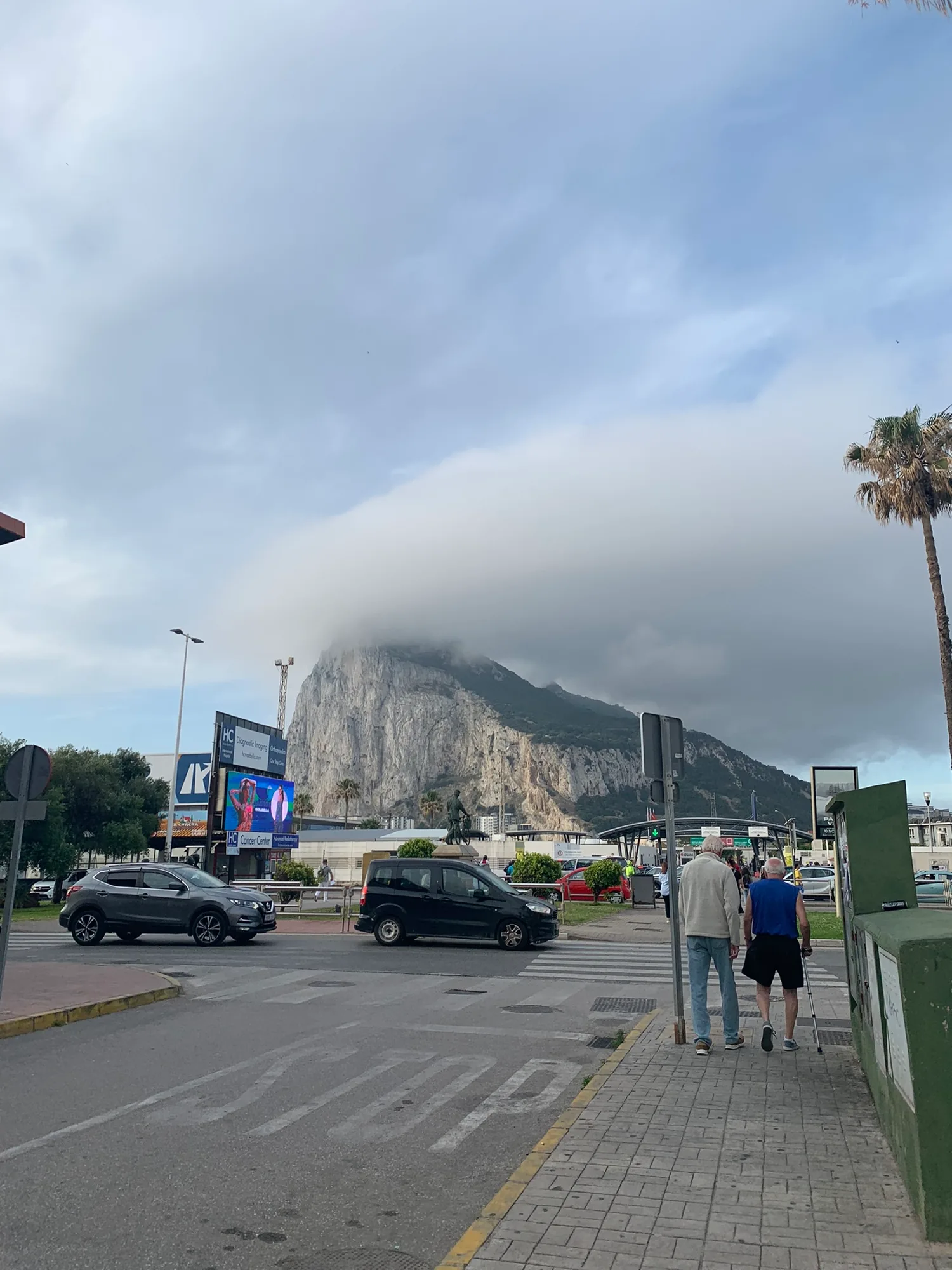
Carry valid identification. The absence of a routine booth does not create a right to enter Gibraltar, Spain or the wider Schengen area without the documents your nationality and residence status require.
If you are visiting Gibraltar from Spain by land, the ordinary frontier stop has gone, but police on either side can still ask for identification. If you arrive in Gibraltar by air or sea, the entry checks happen there. Gibraltar warned on 22 July that the new arrangement cannot be used to bypass UK, Gibraltar or Schengen visa requirements (HM Government of Gibraltar, 22 July 2026).
Visa-required nationals need to check the post-treaty system before booking. Gibraltar closed the former UK visa-application route for Gibraltar travel on 8 July; from 15 July, relevant short-stay applications are handled under the Schengen Visa Code (HM Government of Gibraltar, 15 July 2026). That is a material change, and it is one worth checking with the relevant authority rather than a travel forum.
If you live in La Línea and work in Gibraltar
The daily crossing is easier because the old routine controls have ended. Frontier workers no longer build a normal commute around the possibility of passports being checked one by one, which removes the political and administrative queue that shaped working life here for years.
Road congestion has not been abolished. On 17 July, authorities in Gibraltar and La Línea had to coordinate over traffic leaving Gibraltar during fair week: a sharp turn, a single available lane and several pedestrian crossings slowed the flow (HM Government of Gibraltar, 17 July 2026). That was a traffic problem after the checks ended, not evidence that the old border had returned.
Your residence and employment paperwork also remains real. Living in La Línea still means dealing with Spanish registration, the NIE and green certificate for EU citizens, the TIE process for British residents and the cita previa system. Working in Gibraltar does not make somebody resident there, and a fluid frontier does not create an automatic right to live or work on either side.
Our guide to working in Gibraltar while living in La Línea covers the wider setup. Its old queue description also needs a dated post-treaty correction; the tax and Spanish-paperwork cautions remain.
If you are visiting Gibraltar from Spain
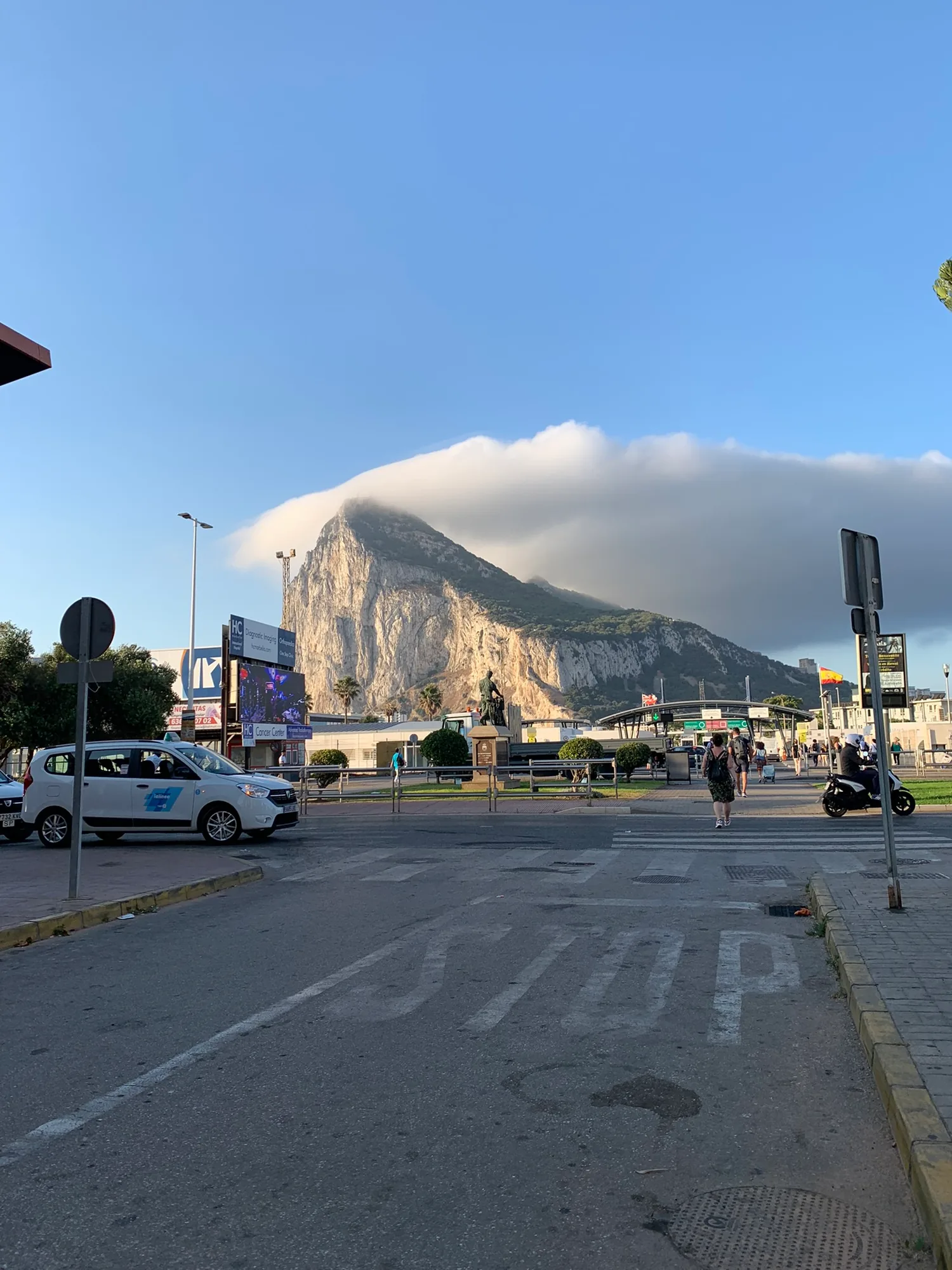
A day trip is now operationally simpler. You can walk from central La Línea into Gibraltar without the former routine passport queue, but take the document appropriate to your nationality and status. The frontier is open; the law is not taking the afternoon off.
Parking on the Spanish side can still make sense because Gibraltar has limited road space and limited parking. That recommendation now rests on cost, convenience and congestion inside Gibraltar rather than an immigration queue at the gate. Our La Línea parking guide for Gibraltar visitors will be updated to make that distinction.
If you are a UK national who is not resident in Gibraltar, time spent in Gibraltar counts towards the 90-days-in-180 Schengen short-stay allowance under the agreement (House of Commons Library, 19 June 2025). A trip to the Rock is not a pause button for somebody using their Schengen allowance in Spain.

What happened to EES and the new security system?
The EU Entry/Exit System, or EES, applies at Schengen external borders. Gibraltar residents are exempt under the treaty arrangements, but non-EU residents must carry an up-to-date Gibraltar identity or civilian registration card when arriving at the airport so officers can confirm that exemption. Gibraltar reported early airport queues for British and other non-EU passengers while the new e-gates were settling, then said the system was operating more smoothly (Borders and Coastguard Agency, 18 July 2026).
The removal of the old frontier structures was paired with more surveillance. Gibraltar reported on 23 July that its expanded CCTV network, live facial recognition and number-plate systems were operating around the border approaches and other parts of the territory (HM Government of Gibraltar, 23 July 2026). The visible gate became smaller while the digital perimeter became larger. Modern borders at their finest.
What changed for shopping and goods?
The agreement created a customs union between Gibraltar and the EU and removed routine customs controls at the land frontier. Gibraltar also introduced its transaction-tax system as the treaty began. The practical retail effect will take longer to judge than the removal of a booth: businesses need to adapt, prices move at different speeds and the rules for personal allowances have a transition period.
For the first three years, official guidance sets personal allowances of €300 when travelling by land and €430 by sea or air. Goods above those thresholds can still be carried, but tax and declaration rules apply (HM Government of Gibraltar, 9 February 2026). The old prediction that Gibraltar would simply become “less cheap” was too blunt; individual prices and categories need checking in the real market.
What the first weeks showed
The main promise was delivered: the treaty was signed, provisional application began on 15 July and routine land-frontier checks ended. The first operational problems were more ordinary — airport e-gates, fair-week traffic and businesses adapting to new customs and tax rules.
The practical distinction matters. A queue caused by one traffic lane and people crossing a road is not the same thing as a queue caused by immigration officers checking every passport. La Línea and Gibraltar will still produce congestion; two compact towns sharing one narrow approach were never going to become Scandinavian infrastructure because somebody removed a booth.
Gibraltar border opening: quick answers
Did the Gibraltar–Spain border checks end?
Yes. Routine immigration and customs checks at the La Línea–Gibraltar land frontier ended when the treaty began provisional application on 15 July 2026.
Do I still need a passport or identity card?
Carry valid identification. Routine checks have ended, but entry, visa and residence requirements still apply and police can request identification.
Can anybody enter Spain through Gibraltar without a visa?
No. The treaty does not create a route around Gibraltar, UK or Schengen immigration requirements. Visa-required travellers must hold the documentation applicable to their journey.
Does EES apply at the La Línea land crossing?
There are no routine EES checks at the land frontier. Schengen checks take place at Gibraltar’s airport and, where needed, its port. Gibraltar residents are exempt from EES but should carry their current Gibraltar identity or registration card when arriving from outside.
Does time in Gibraltar count towards a UK visitor’s Schengen allowance?
Yes. For UK nationals who are not Gibraltar residents, time in Gibraltar counts towards the 90-days-in-180 Schengen short-stay allowance.
Should visitors still park in La Línea and walk?
Often, yes. Gibraltar still has limited road space and parking, while the walk from the frontier to the centre remains short. The decision is now mainly about cost and convenience, not avoiding routine passport controls.
If you would rather not do this alone
Send us a message saying what you need and we will tell you what your options are. Somebody local handles the paperwork end of this for a living, speaks the language of the counter clerk that you and your translation app do not, and knows which window sends people home over a missing photocopy. Tell us what you are trying to do and we will come back to you.
Prefer a form? Tell us your situation →
- Getting the cita previa, which is the part that actually stops people, and retrying until one comes.
- Filling the forms properly and telling you exactly which papers to bring.
- Going with you to the office when it helps to have somebody who can argue in Spanish.
- Empadronamiento and the other small steps nobody warns you about.
Escríbenos por WhatsApp (español)
Message us on WhatsApp (English)
Tell us what you need and we will quote you before anything starts — and if it is not something we can help with, we will say so rather than take the work. Government fees (the tasa) are separate and are always paid to the bank, never to us. We are not lawyers and we do not handle visa applications; this is practical help with the in-Spain steps, not legal advice.
Updated 10 August 2026. Border operations, immigration rules, tax arrangements and travel requirements can change. This is a resident’s guide, not legal, immigration or tax advice; check the relevant official authority before relying on it for a journey or formal decision.
The fence is gone. The frontier remains, but now most people meet it in rules and road design rather than a booth.