How to Get from Gibraltar or La Línea to Ceuta: Ferry, Driving and Border Guide
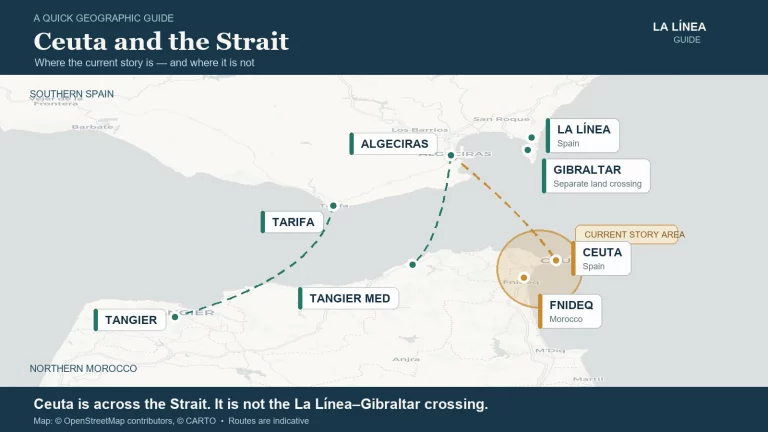
Updated 2 August 2026. To travel from Gibraltar or La Línea to Ceuta, first go to the Port of Algeciras, then take the ferry across the Strait. There is no direct Gibraltar–Ceuta ferry: the practical route is La Línea or Gibraltar → Algeciras → Ceuta.
The crossing itself is short. The part that needs planning is getting to Algeciras, allowing time for check-in and deciding whether to travel as a foot passenger or take a car.
Gibraltar to Ceuta: the route at a glance
- Cross from Gibraltar into La Línea on foot or by car.
- Travel west to the Port of Algeciras.
- Check in for an Algeciras–Ceuta sailing.
- Take the ferry to the Port of Ceuta.
From central La Línea, Algeciras is roughly 25 kilometres by road. Traffic around the Gibraltar frontier, the A-7 and the port can change the journey time considerably, so do not build a tight connection around the fastest mapping-app estimate.
If you are starting in Gibraltar without a car, walk across the frontier and continue from La Línea by bus or taxi. If you are driving, read our guide to the parking options beside the Gibraltar border before deciding where to leave the vehicle.
How long is the ferry from Algeciras to Ceuta?
The sailing normally takes about one hour on a fast ferry and around 90 minutes on some conventional services. Baleària currently describes the route as approximately one hour by fast ferry, with multiple sailings on operating days. Timetables, vessels and fares change by season, so check the operator’s live booking system rather than relying on an old timetable reproduced by a travel blog.
Compare ferry companies and booking options
The companies and departure times offered on this route can change, so compare the sailing time, vessel type, change conditions and final checkout price—not only the first advertised fare. For current operator information, check Baleària and DFDS. Naviera Armas sailings may also be available through its official booking website.
Comparison services can be useful when you want to see several operators together. Check the Algeciras–Ceuta results on Ferryhopper, Direct Ferries and Ferryscanner. Then compare the total price, including booking or amendment fees, with the operator’s own website before paying.
Editorial disclosure: these are ordinary, non-affiliate links. La Línea Guide does not currently receive commission from these companies, and inclusion is based on usefulness for this journey rather than payment.
Getting from La Línea to Algeciras port
By car or taxi
Driving or taking a taxi is the simplest option when a specific sailing matters. Allow extra time at weekday peaks, on summer changeover weekends and during Operation Crossing the Strait. The port is large: “Algeciras” on the road signs is not the same thing as standing at the correct passenger check-in desk.
By bus
Bus travel can work for a day trip, but check the current La Línea–Algeciras timetable in both directions before buying the ferry. Leave a generous buffer between the scheduled bus arrival and the ferry check-in deadline. A delayed inbound bus is not normally a reason for a ferry operator to hold a vessel.
On an organised transfer
A private transfer costs more but removes the connection problem. It can make sense for a group, for passengers with luggage or when the return sailing arrives after the most convenient public-transport connection.
Should you take a car to Ceuta?
A car is useful if you want to reach viewpoints, beaches or the outer parts of Ceuta in one day. It also adds cost and another check-in process. For a first visit centred on the port, city centre and waterfront, travelling as a foot passenger is often simpler.
If you take a vehicle, reserve the correct vehicle type and dimensions. Baleària’s current guidance says passengers with vehicles on the Algeciras–Ceuta route should present themselves at least 30 minutes before departure, but treat that as a minimum set by one operator—not a sensible target for arriving at the port. Aim earlier and follow the deadline printed on your own booking. The operator’s vehicle-boarding guidance explains the information required when reserving a space.
What documents do you need for Ceuta?
Ceuta is a Spanish autonomous city. Travelling from mainland Spain to Ceuta is not the same journey as entering Morocco. Carry the passport or national identity document appropriate to your nationality and booking, and make sure the passenger name matches the ticket.
Rules can differ for children, non-EU nationals, residents travelling with residence cards and passengers intending to continue into Morocco. Ferry staff or police may request identification even when the domestic nature of the journey makes the crossing feel routine. Check current official requirements before departure, particularly if your right to re-enter Spain or Gibraltar depends on a visa, residence status or passport-validity rule.
Ceuta is not the same route as Tangier
This distinction prevents a surprising number of bad itineraries. The Algeciras–Ceuta ferry lands in Spain. Algeciras–Tangier Med and Tarifa–Tangier Ville land in Morocco. Ceuta has a separate land frontier with Morocco at El Tarajal.
If your goal is simply a day in Ceuta, you do not need to cross into Morocco. If your goal is Tangier, the direct Tangier routes are normally more logical. Crossing to Ceuta and then attempting the land frontier creates additional immigration, customs and transport steps.
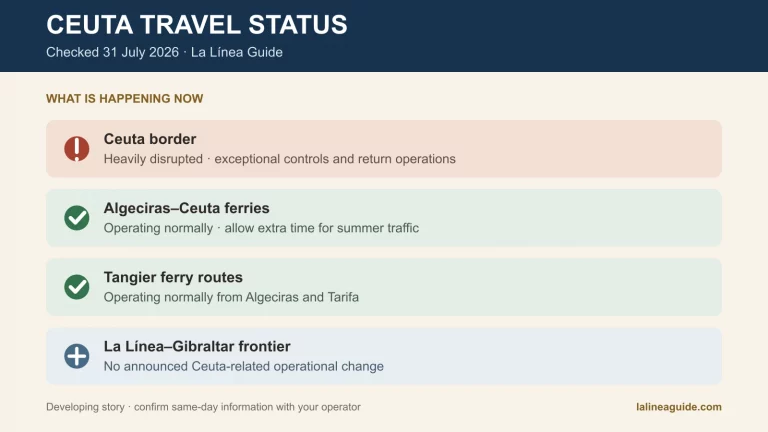
For the geographic and political background, read what is happening in Ceuta and what it means for La Línea and Gibraltar. Our latest Ceuta travel update covers current disruption separately. For the latest verified position on visitor safety and reported local boat arrivals, see our 10 August La Línea safety update.
Can you visit Ceuta as a day trip from Gibraltar?
Yes, but it is a full transport day rather than a quick hop across the water. You need time to cross the Gibraltar frontier, reach Algeciras, check in, sail, visit Ceuta and repeat the journey in reverse.
Book the outward and return legs together, then work backwards from the final sailing. A day trip is most comfortable when the timetable gives you several hours ashore without relying on the last possible connection back to La Línea.
A practical day-trip checklist
- Check the Gibraltar frontier and road conditions.
- Confirm the current La Línea–Algeciras transport timetable.
- Compare operators and booking services, then book the option with the best suitable schedule, total price and conditions.
- Carry the identification specified on the booking.
- Arrive earlier than the minimum check-in deadline.
- Check the weather and return sailing before leaving Ceuta.
- Keep enough time to return from Algeciras to La Línea.
If the Gibraltar crossing is part of your journey, see what changed at the La Línea–Gibraltar border. The Gibraltar frontier, the Algeciras ferry terminal and the Ceuta–Morocco land border are three different controls; treating them as one “border” is where most planning mistakes begin.
Quick answers
Is there a direct ferry from Gibraltar to Ceuta?
No. Travel from Gibraltar into La Línea, continue to Algeciras and take the ferry from there.
How long does Gibraltar to Ceuta take?
The ferry is usually about one to one and a half hours, but the complete trip also includes the Gibraltar frontier, the journey to Algeciras and ferry check-in. Plan the whole chain, not only the sailing.
Can you take a rental car to Ceuta?
Only if the rental agreement and ferry operator allow it. Obtain written confirmation rather than assuming that permission to drive in Spain includes sea transport to Ceuta.
Do you enter Morocco when visiting Ceuta?
No. Ceuta is Spanish territory. Entering Morocco requires a separate journey through the land frontier.
Should you book the ferry in advance?
Yes when travelling with a vehicle, at weekends or in busy summer periods. Foot-passenger availability can also tighten around holidays and major travel weekends.
Schedules, fares and document rules can change. This guide explains the route; your operator and the relevant authorities control the conditions that apply on your travel date.