What Is Happening in Ceuta — and What It Means for La Línea and Gibraltar
Update: this article is now the background explainer.
The figures and official response have changed quickly since this article was published. Read our latest Ceuta update for the confirmed 50,000 estimate, return movements and current travel information.
Checked again 10 August: For the later return figures, reported small-boat arrivals around the Campo de Gibraltar and current visitor advice, read our 10 August La Línea safety update.
The geography and local explanation below remain useful, but its operational details are outdated. Check the latest update before travelling.
The videos are from Ceuta. They are not from Gibraltar, and they do not show the La Línea frontier. That distinction matters before anything else.
Ceuta has experienced a sharp rise in irregular crossings from Morocco, putting its reception services and border teams under heavy pressure. Spain has announced reinforcements, while the Spanish and Moroccan governments say they are coordinating their response and the return process (Associated Press, 30 July 2026; Cadena SER, 30 July 2026).
For somebody in La Línea, or a visitor planning a day in Gibraltar, the immediate answer is simpler: there is currently no reason to change those plans because of events in Ceuta. The two places share a narrow stretch of water and plenty of history, but they do not share a border crossing.
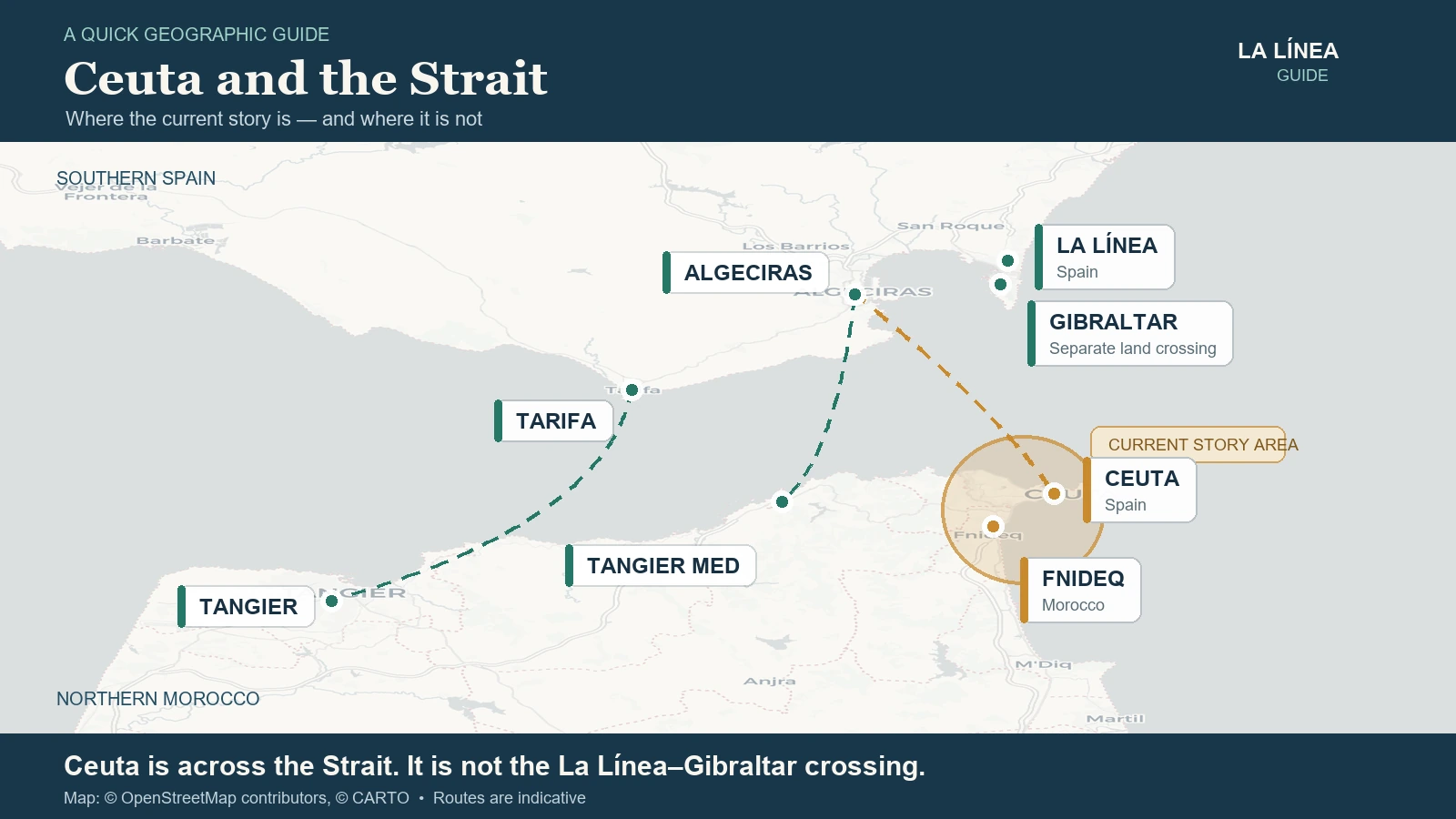
Ceuta and Gibraltar: how far apart, and can you see one from the other?
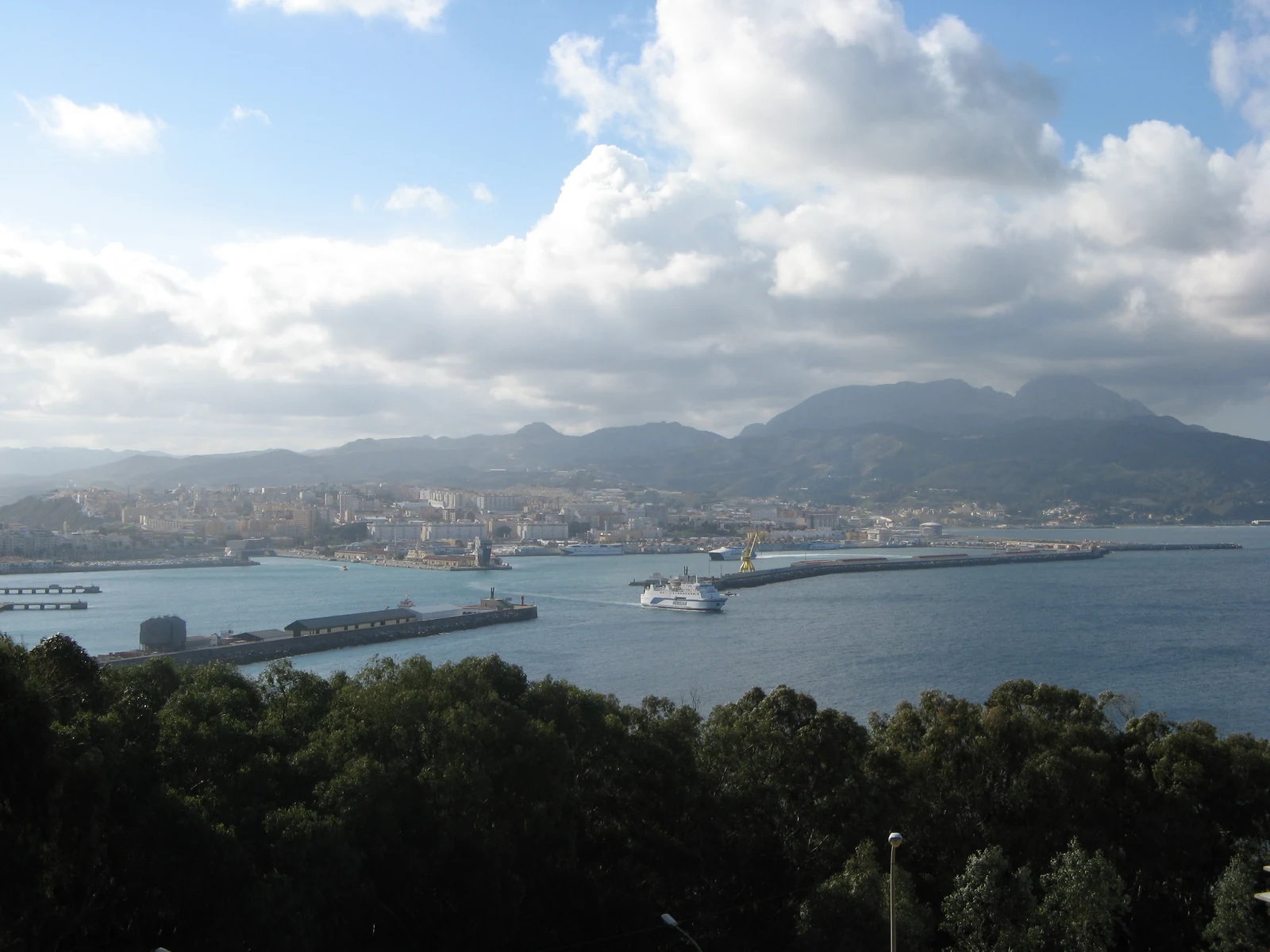
Ceuta is a Spanish city on the north coast of Africa, across the Strait from Gibraltar. It is not at the La Línea frontier and there is no road between them.
- Distance. One academic source puts the line from Europa Point (Gibraltar) to Punta Almina (Ceuta) at about 24 km (address to the Real Academia de la Mar, 2022). We did not find an official survey figure, so treat it as an approximation. Do not confuse it with the narrowest point of the Strait, which is between Spain and Morocco and is given as about 14 km (Wikipedia).
- Can you see Ceuta from Gibraltar? The Gibraltar Heritage Trust says that on a clear day the ports of Ceuta and Morocco can be seen from Europa Point (Gibraltar Heritage Trust). Weather matters: the Government of Gibraltar notes that sea fog is not uncommon in summer easterly (Levanter) conditions (Gibraltar Tourist Board). We found no source giving how often the view is clear.
What is happening in Ceuta?
Large groups have reached Ceuta from the Moroccan side over several days, first by sea and then through the frontier area. The Spanish government has sent additional support, and authorities in Ceuta have asked Madrid for help managing the number of arrivals. Morocco has also increased activity on its side of the border, according to reporting from northern Moroccan outlets.
The cause is less tidy than the clips circulating online. Le Journal de Tanger reported that young people had travelled north after seeing calls shared on social media. Spanish reporting has also examined the possible influence of summer conditions and a recent Supreme Court decision concerning immediate returns after sea arrivals (El País, 30 July 2026). These factors may have contributed. None has been established as the single explanation.
That uncertainty is worth keeping. Social media can help organise a journey and amplify a rumour; repetition does not establish the cause. Evidence takes longer.
Does this affect La Línea or Gibraltar?
No direct effect has been reported. La Línea and Gibraltar are roughly 30 kilometres from Ceuta across the Strait, but the La Línea–Gibraltar crossing is a separate frontier with a separate legal and operating system. Routine land checks there ended on 15 July under the new UK–EU agreement, designed to keep movement fluid for residents, visitors and roughly 15,500 frontier workers (Council of the EU; HM Government of Gibraltar).
The practical connection is local attention. People in the Campo de Gibraltar watch events across the water because ferries, ports, tourism and family journeys tie the two shores together. If you live in La Línea and work in Gibraltar, though, your morning route does not suddenly pass through Ceuta. Our guide to working in Gibraltar while living in La Línea covers the crossing that actually shapes daily life here.
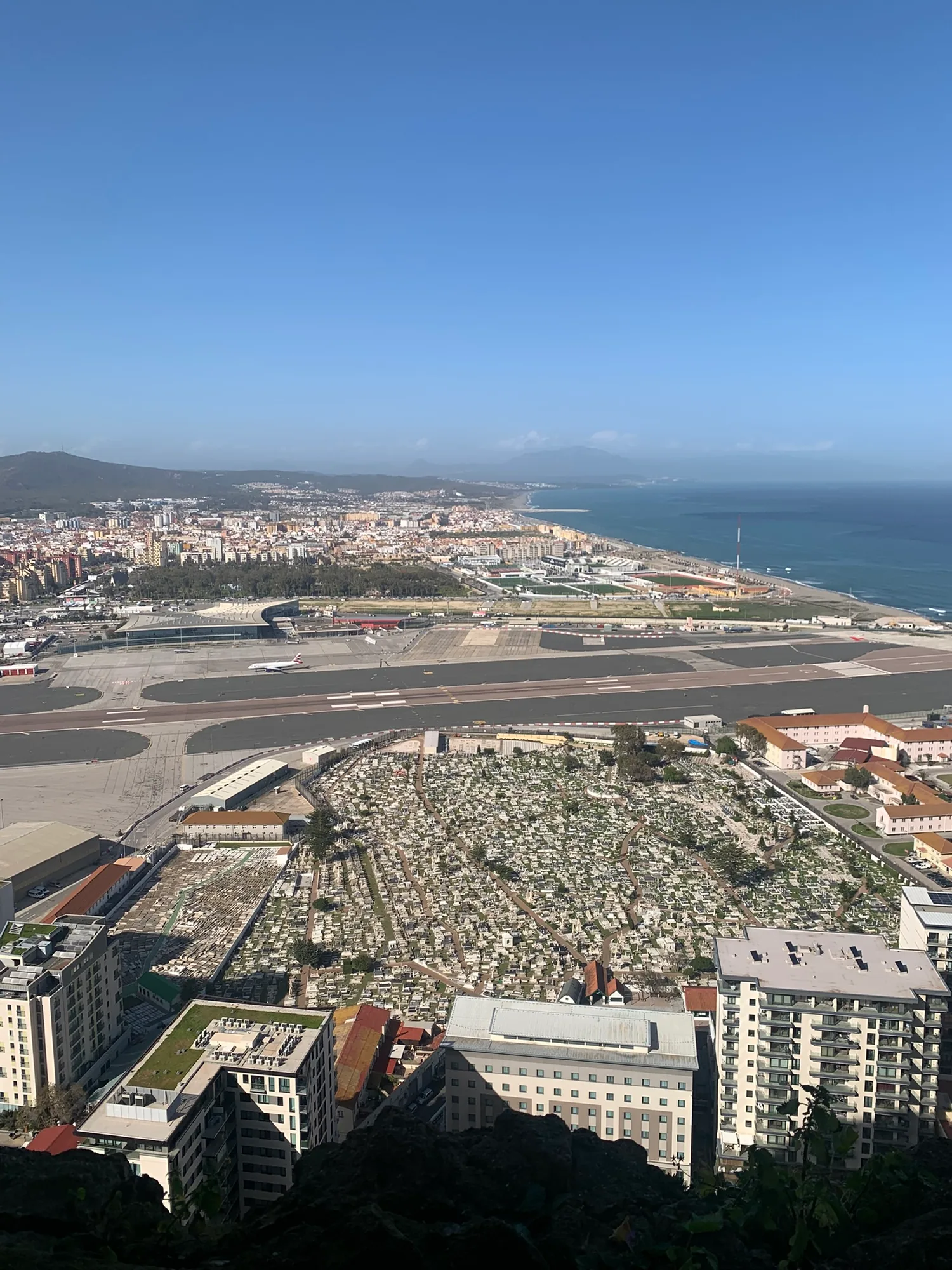
Ceuta and Gibraltar both carry old sovereignty questions, so a border event on one side of the Strait is quickly recruited into arguments about the other. Spain and Morocco do not describe Ceuta in the same terms, while Spain and the United Kingdom retain their positions on Gibraltar even after July’s practical agreement. That history explains some of the noise around this story; it does not establish its cause. There is no verified evidence connecting the Ceuta crossings with Gibraltar or the La Línea frontier.
What should travellers check?
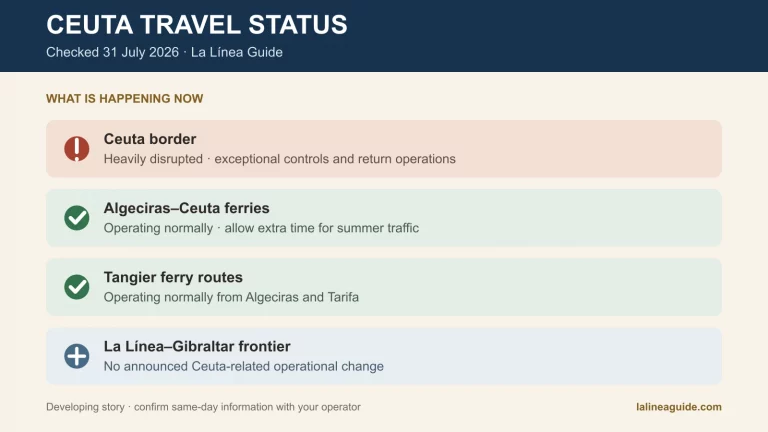
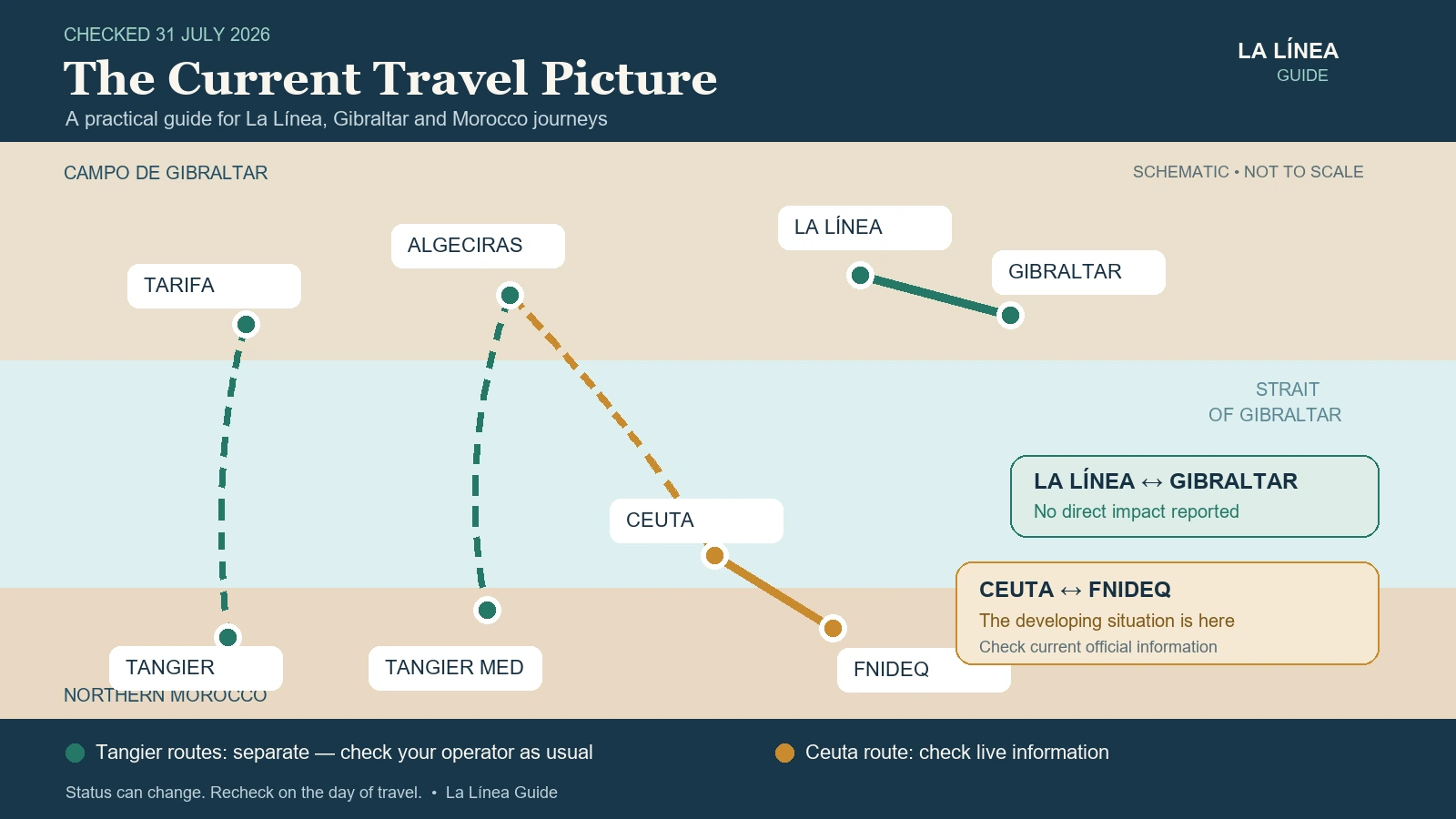
The routes need separating before they need worrying about. La Línea–Gibraltar is a land crossing in Europe. Algeciras–Ceuta is a ferry to the affected city. Algeciras–Tangier Med and Tarifa–Tangier are different Morocco routes.
| Journey | What to know |
|---|---|
| La Línea ↔ Gibraltar | No direct impact reported. Continue to carry valid identification. |
| Algeciras ↔ Tangier Med | A separate route from Ceuta. Check your operator and port information as usual. |
| Tarifa ↔ Tangier | Also separate. Same-day weather and operator checks remain sensible. |
| Algeciras ↔ Ceuta | Check current information for Ceuta and confirm the sailing before departure. |
| Ceuta ↔ Fnideq | This is the frontier directly involved in the developing situation. |
Spain’s 2026 Operation Crossing the Strait treats these ferry corridors separately. During its first month, Algeciras–Tangier Med was the busiest route, followed by Tarifa–Tangier and then Algeciras–Ceuta, with the Spanish government reporting coordinated operations and normal flow during that period (La Moncloa, 16 July 2026). A problem at one crossing should not be copied and pasted onto every journey around the Strait.
Why the 2030 World Cup matters
Football is not a peace treaty, but it is a very expensive deadline. Morocco, Portugal and Spain are the confirmed main hosts of the 2030 FIFA World Cup, giving Spain and Morocco four years of shared transport, security, tourism and reputation work (FIFA).
The cooperation already exists on paper. In their December 2025 joint declaration, Spain and Morocco committed themselves to better services across the Strait and stronger coordination for fluid, high-quality maritime connections before 2030. Spain, Morocco and Portugal have since agreed a judicial-cooperation programme covering 2026 to 2030 (Spain–Morocco joint declaration; La Moncloa, 10 April 2026).
The World Cup cannot resolve the pressures that bring people to the Ceuta frontier. It does give both governments another reason to keep the Strait functioning, predictable and boring. On a border, boring is normally the better product.
Ceuta, La Línea and Gibraltar: quick answers
Is Ceuta close to Gibraltar?
Yes. Ceuta lies across the Strait, roughly 30 kilometres from Gibraltar in a straight line. It is reached through different sea and land routes and is not part of the La Línea–Gibraltar crossing.
Is the Gibraltar border affected by events in Ceuta?
No direct effect has been reported, and no related restriction has been announced at the La Línea–Gibraltar frontier. The crossing continues under the arrangements introduced on 15 July 2026.
Is La Línea safe to visit during the Ceuta situation?
The events in Ceuta do not currently change normal travel advice for La Línea or Gibraltar. Visitors should use ordinary precautions and check official information if their journey specifically includes Ceuta.
Can I still travel from Algeciras or Tarifa to Morocco?
The Tangier routes are separate from the Ceuta–Fnideq frontier. Check your ferry operator and port before travelling, particularly for weather or timetable changes, but do not assume that footage from Ceuta describes the Tangier routes.
Are Spain and Morocco in a new political confrontation?
There is no verified evidence of that at present. The two governments say they are coordinating their response, while their wider transport and World Cup plans continue to depend on close cooperation.
What does the 2030 World Cup have to do with this?
Spain and Morocco, together with Portugal, will host the main tournament. Preparing for it requires coordinated transport, policing, tourism and cross-Strait travel, giving both countries a practical interest in stable relations.
Will La Línea Guide update this story?
Yes. We will check official Spanish and Moroccan statements, local reporting and travel information again on 1 August at 14:00. If the situation changes materially, we will publish a dated update and link it here.
Ceuta is close enough to place on the same map. It is still a different journey, a different frontier and, for now, a different problem. We will check again tomorrow; rumours cross the Strait faster than ferries.